
Last Updated on November 4, 2026 by haydenholmes
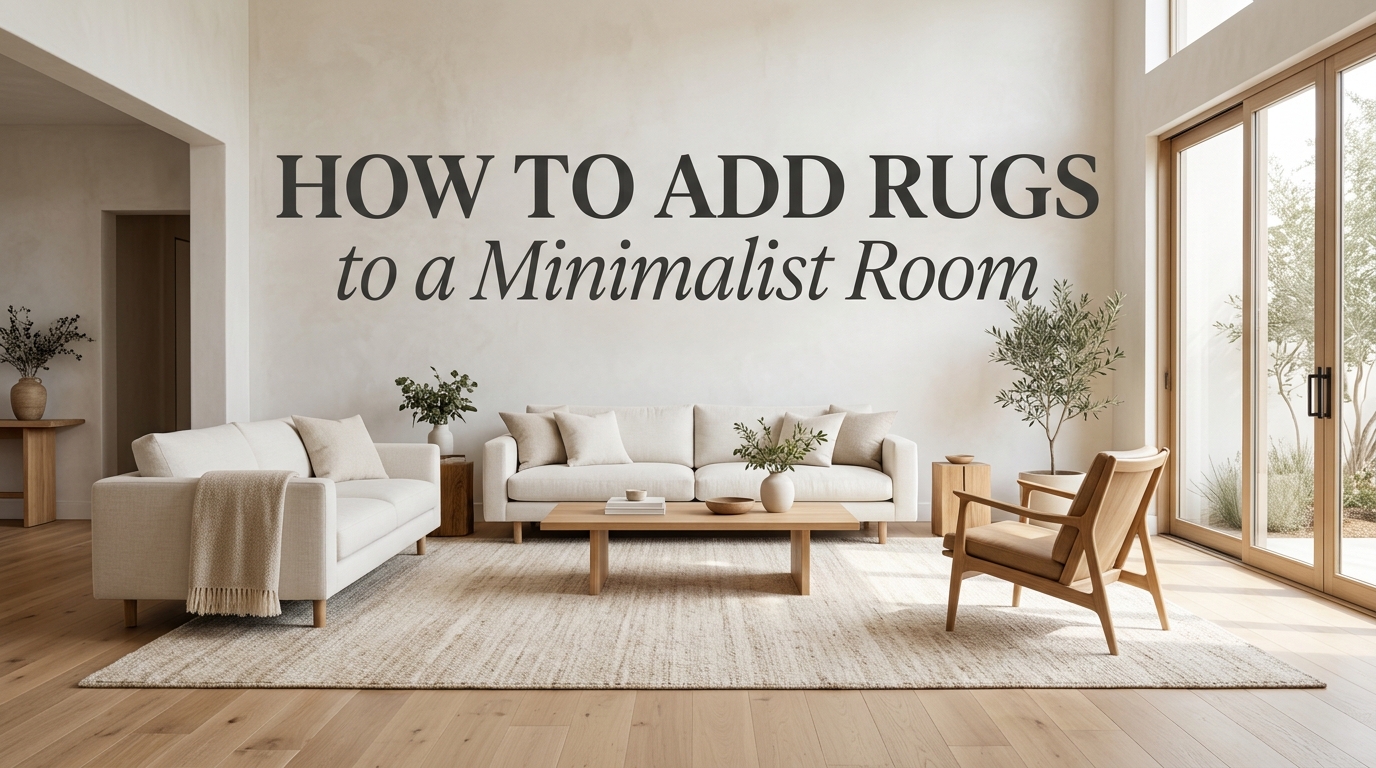
A minimalist space can feel calm, open, and intentional. Yet too many hard surfaces can make the room feel cold. Learning how to add rugs to a minimalist room helps you introduce warmth without creating visual clutter.
The key is choosing one piece that supports the room instead of competing with it. Size, texture, color, and placement all matter. A carefully selected area rug can also make furniture arrangements feel more connected.
Direct answer: Choose an area rug large enough to anchor your main furniture grouping. Keep its colors close to the existing palette, then add interest through texture instead of bold pattern. Place furniture partly or fully on the rug, protect walking paths, and use layering only when the room needs extra depth.
| Design decision | Good minimalist approach | What to avoid |
|---|---|---|
| Color | Warm neutrals, muted earth tones, soft gray | Bright, unrelated colors |
| Pattern | Tonal, geometric, lightly textured | Busy, high-contrast prints |
| Size | Large enough to connect furniture | Small floating rugs |
| Texture | Wool, flatweave, jute, sisal | Excessive decorative detail |
| Placement | Centered on the furniture grouping | Random placement |
| Layering | One quiet base and one accent | Several competing layers |
| Maintenance | Simple, regular cleaning | High-maintenance materials in busy areas |
How to Add Rugs to a Minimalist Room in 7 Steps
Minimalism works best when every visible item has a purpose. Your floor covering should therefore solve both practical and visual needs. These seven steps can help you make that decision with less guesswork.
1. Measure the furniture zone before shopping. Measure the seating, bed, or dining area rather than only the room. Use painter’s tape to preview the rug’s footprint. 2. Choose the largest practical size. A larger area rug usually makes furniture feel connected. A tiny one can create an isolated island effect. 3. Match the room’s color temperature. Warm woods work well with oatmeal, cream, camel, and warm gray. Cooler finishes can suit stone, charcoal, or muted blue-gray. 4. Use texture before strong pattern. Wool, flatweave, jute, and woven surfaces create visual depth. They can add character without introducing another focal point. 5. Place furniture deliberately on the rug. Seating should touch the floor covering visually. Front-leg placement works well when full placement is not practical. 6. Add a rug pad where appropriate. A suitable pad can reduce movement and protect flooring. Always follow the rug and flooring manufacturers’ care guidance. 7. Edit the surrounding decor afterward. Remove accessories that now feel unnecessary. The finished room should still have clear surfaces and breathing space.
Start With Rug Size, Not Color
Size has a stronger visual effect than most shoppers expect. An undersized rug can break one furniture group into several disconnected pieces. A larger option creates a clearer boundary around the seating or sleeping area.
In a living room, aim to place at least the front legs of the furniture on the rug. Larger rooms can often support all furniture legs on it. This approach gives sofas and chairs a shared visual foundation.
Common U.S. living-room sizes include 8-by-10-foot and 9-by-12-foot options. Your actual furniture dimensions should guide the final choice. Tape the proposed outline on the floor before ordering.
The same principle works especially well over exposed wood flooring. MagClone’s guide to hardwood flooring explains why wood works with many interior styles. A well-scaled area rug can preserve that visible flooring while softening the room.
Choose Quiet Colors With the Right Undertone
Minimalist interiors do not require an all-white palette. Warm taupe, cream, sand, mushroom, charcoal, and muted olive can remain restrained. The important point is matching the room’s existing undertones.
Look at your largest fixed surfaces before choosing a color. These include flooring, walls, cabinetry, and large upholstery. Your new floor textile should relate to at least two existing colors.
A pale neutral is not always the safest choice. Busy households may prefer a medium tone that hides everyday dust better. A slightly deeper shade can also keep an all-beige room from feeling flat.
Test samples in your actual lighting whenever possible. Color can change between daylight and evening lamps. A sample also shows whether the texture works beside your furniture.
Let Texture Create Interest
Texture is especially useful when you want fewer decorative objects. A woven surface catches light differently from smooth flooring. This small contrast gives the room depth without adding another color story.
Wool works well in bedrooms and living areas because it feels soft underfoot. Flatweaves offer a cleaner profile and can suit modern furniture. Natural fibers can bring an organic look to simple interiors.
Material should also match your household. Pets, children, and heavy foot traffic may require easier cleaning. The Carpet and Rug Institute recommends regular vacuuming and quick attention to spills.
You can repeat a rug’s texture elsewhere without making the room busy. A restrained throw or cushion can echo that tactile quality. MagClone’s throw pillow care guide can help you maintain those supporting textiles.
Use Pattern Sparingly, Not Automatically
A minimalist room can still contain pattern. The safest choices use low contrast and limited colors. Small geometric lines, faded motifs, and tonal shapes usually feel calmer.
Pattern works best when other large surfaces remain quiet. A patterned sofa beside a patterned floor covering may create unnecessary competition. Let one major surface carry the strongest visual detail.
Scale matters too. Large, open motifs often feel less busy than many tiny repeated shapes. View the design from across the room before deciding.
If the room already has books, artwork, or open shelving, consider a quieter floor. MagClone’s living room bookshelves guide offers ideas for keeping storage visually organized. That restraint helps the rug support the room instead of fighting for attention.
Place the Rug Around the Furniture, Not the Walls
The furniture grouping should determine placement. Centering a rug only within the room can leave seating strangely offset. Instead, align it with the sofa, table, bed, or other main arrangement.
For living rooms, place the rug beneath the coffee table and main seating zone. Put front furniture legs on it when full placement is unnecessary. Keep the exposed floor border reasonably consistent where the layout allows.
Bedrooms need a different approach. Position the area rug where your feet land beside the bed. Extending it beyond the sides creates comfort while keeping the layout balanced.
Dining spaces need enough width for moving chairs. Chairs should remain supported when people pull them outward. A low-profile construction also reduces interference around chair legs.
Keep Small Minimalist Rooms Visually Open
Small rooms do not always need small rugs. A tiny rug can emphasize limited floor space. One adequately sized piece often makes the arrangement feel broader and more unified.
Keep some flooring visible around the perimeter. That border gives the eye a clear boundary. It also maintains the open-floor feeling associated with minimalist interiors.
Avoid placing many small pieces throughout one room. They divide the floor into separate visual zones. One main area rug is usually cleaner and easier to coordinate.
Vertical storage can further protect limited floor space. Simple shelving keeps useful items away from walkways. MagClone’s broader Home Improvement section includes additional ideas for practical room updates.
Should You Layer Rugs in a Minimalist Space?
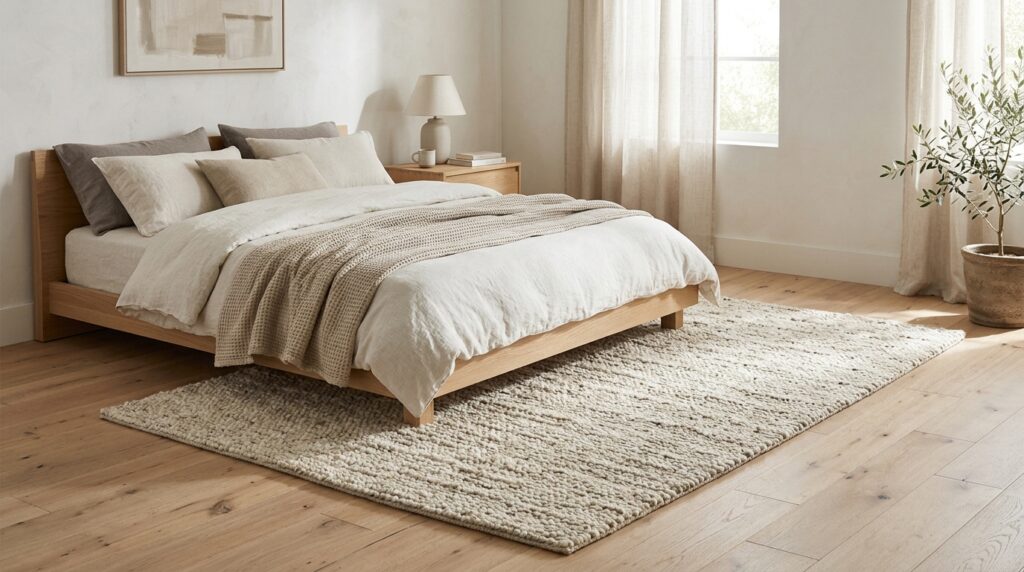
Layering can work, but it should solve a specific design problem. It can add warmth, define a small conversation area, or reuse a favorite smaller piece. Layering for decoration alone can create unnecessary visual weight.
Start with a large, quiet base in a neutral color. Add one smaller top piece with a different texture or restrained pattern. Keep both within a related color family.
Avoid combining two strong patterns. The competing surfaces can make a simple room feel busier. Contrast textures instead of adding more colors.
You should also consider traffic flow. Secure each layer according to the manufacturers’ instructions. Avoid unstable edges in busy walking routes.
Match the Rug to Daily Life
A beautiful choice can still be wrong for your household. Think about shoes, pets, children, sunlight, and eating habits. These conditions should influence material and color.
Low-pile and flatwoven designs are practical in many active spaces. They usually create less visual volume than deep shag styles. Their cleaner profile also pairs well with low, modern furniture.
Light colors may require more visible upkeep. Dark solid colors can also show lint and pet hair. Mid-tone textures often disguise normal daily wear more easily.
Follow the care label rather than assuming every rug uses the same cleaning method. The Carpet and Rug Institute recommends vacuuming regularly and treating spills promptly. Appropriate care preserves both appearance and usable life.
Common Mistakes That Make a Minimalist Room Feel Cluttered
The first mistake is choosing a floor covering that is too small. Small scale can make furniture look disconnected. Measure the full furniture zone before buying.
The second mistake is introducing too many competing design signals. Bold color, heavy pattern, and dramatic texture rarely need to appear together. Select one feature and keep the others restrained.
Another mistake is ignoring undertones. Cool gray beside warm orange wood can feel disconnected. Compare samples directly against flooring and upholstery before making the final choice.
Finally, avoid adding more decor because the new piece feels understated. Minimalism depends on intentional editing. Give the finished room time before adding anything else.
Frequently Asked Questions
How to add rugs to a minimalist room without creating clutter?
Start with one properly sized area rug that anchors the main furniture grouping. Choose a restrained color and let texture provide most of the visual interest. Keep surrounding accessories limited so the floor remains part of the room’s calm structure.
What color rug works best in a minimalist room?
Warm neutrals are dependable choices, including cream, taupe, oatmeal, and soft gray. Muted sage, clay, or blue can also work when those tones already appear elsewhere. Match the rug’s undertone with your floor and furniture.
Can a minimalist room have a patterned rug?
Yes, provided the pattern remains controlled. Tonal geometrics and faded motifs can add interest without dominating the space. Keep nearby upholstery and curtains simpler when the floor has visible pattern.
What rug size works best for a minimalist living room?
Choose a size that connects the main seating pieces. At minimum, the front legs of major seating should usually reach the rug. Larger layouts can place the full furniture grouping on it.
Do natural-fiber rugs work with minimalist interiors?
They often suit minimalist interiors because their woven surfaces provide subtle texture. Jute and sisal create a more organic appearance. Consider softness and maintenance needs before using them in bedrooms or high-traffic spaces.
Can I use more than one rug?
Yes, but each extra piece needs a clear purpose. Two can define separate zones in an open-plan room. Keep their colors related so the room still reads as one composition.
Create Warmth Without Losing Simplicity
The strongest minimalist rooms are not empty. They contain a small number of carefully chosen elements. A properly sized area rug can bring comfort, structure, and texture without sacrificing that restraint.
Begin by measuring the furniture zone and studying the room’s existing colors. Then choose material and placement based on how you use the space. Edit nearby accessories after the rug is installed.
Treat the floor covering as part of the architecture, not another decoration. That mindset makes every choice easier. You can then build a room that feels warm, useful, and deliberately simple.