Last Updated on November 15, 2026 by haydenholmes
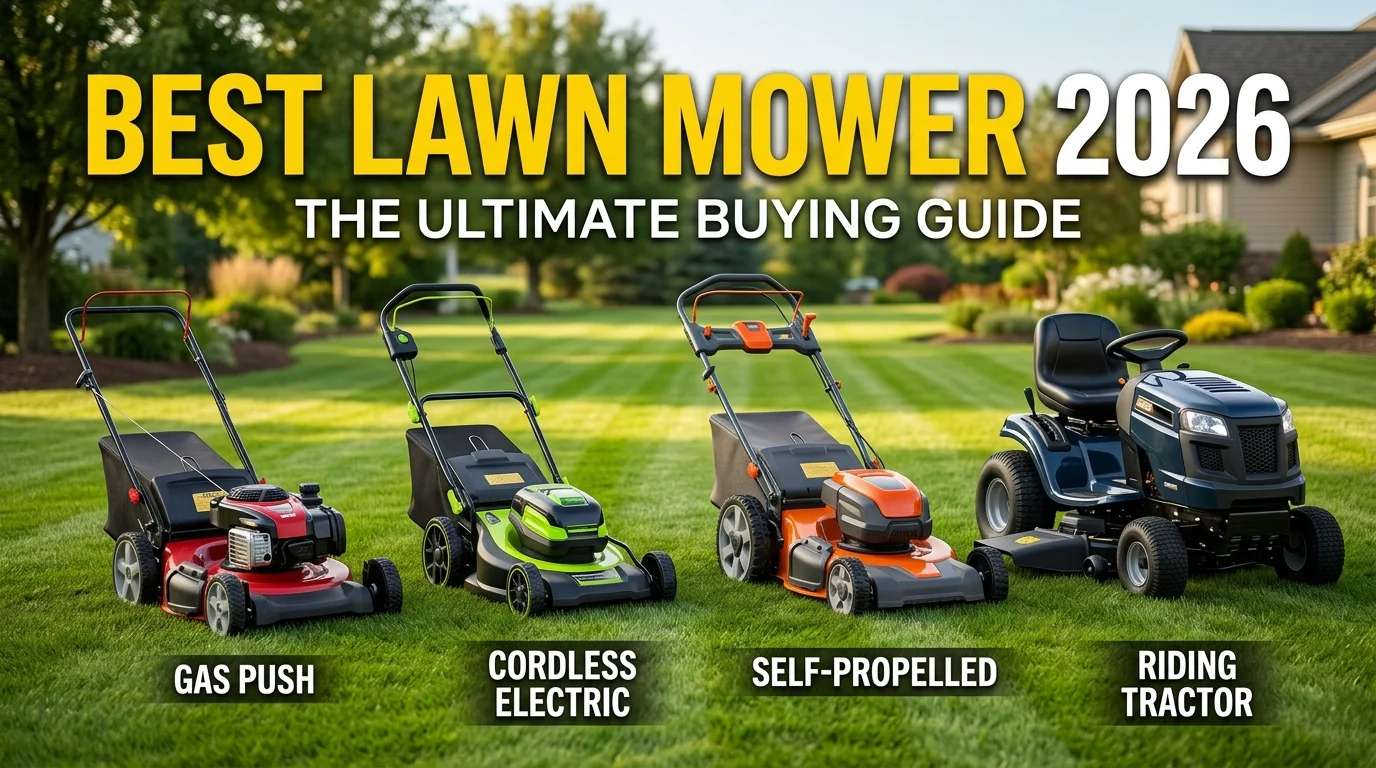
The best lawn mower 2026 shoppers should consider depends heavily on yard size and terrain. For most American homes, a self-propelled battery model offers the strongest balance of power and convenience. Gas, robotic, and riding machines still make more sense for certain properties. Current testing also shows that battery models have become serious alternatives to traditional gas machines. Consumer Reports tests more than 180 mower and tractor models across its current ratings. Popular Mechanics also places battery machines among its strongest walk-behind choices for 2026.
Quick answer: Most U.S. homeowners should start with a 21-inch self-propelled battery model. EGO and Toro are strong premium choices, while Ryobi offers better value. Large properties may justify a riding mower, while homeowners who want automated maintenance should consider Husqvarna’s 410 iQ robot.
Best Mowers of 2026 at a Glance
| Pick | Best for | Power type | Key advantage | Main drawback |
|---|---|---|---|---|
| EGO Power+ Select Cut XP | Best overall | Battery | Excellent cutting and mulching | Premium price |
| Toro 60V Super Recycler | Premium alternative | Battery | Strong deck and self-propel system | Expensive |
| Ryobi 40V HP 21-inch | Best value | Battery | Strong features for the money | Charging can take longer |
| Craftsman M220 | Budget gas buyers | Gas | Familiar power and self-propel drive | More maintenance |
| Greenworks 80V | Thick grass | Battery | Strong cutting power | Large battery system |
| Husqvarna Automower 410 iQ | Best robot | Battery robot | Wire-free automated mowing | High purchase price |
| John Deere S130 | Larger yards | Gas tractor | 42-inch deck and comfortable operation | Needs more storage |
No single machine wins every category. A quarter-acre suburban yard creates different demands than a one-acre property. Your best choice starts with area, slopes, obstacles, storage, and preferred maintenance level. If you are also laying new grass, our guide to DNA-certified turf explains what to look for first.
1. EGO Power+ Select Cut XP, Best Overall
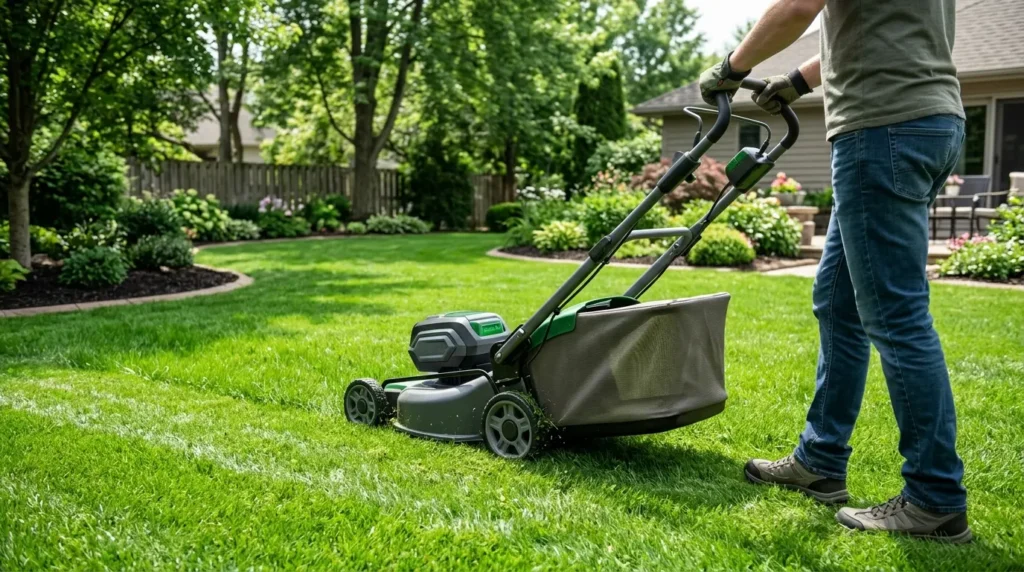
EGO earns our top position because several independent 2026 evaluations place its Select Cut platform near the front. Popular Mechanics named a 21-inch Select Cut XP its best overall electric choice. Bob Vila also favored an EGO Select Cut model after testing battery-powered machines. Its multi-blade cutting system is a major strength for homeowners who mulch or bag regularly. Self-propulsion also reduces effort on larger suburban lots and gentle slopes. The battery platform can power other compatible outdoor tools, adding value for existing EGO owners. The main disadvantage is price compared with basic push equipment. Dense or wet growth can also reduce real-world battery endurance. Buyers with average residential yards should still put this model near the top of their shortlist.
Pros: Excellent cut quality, strong mulching, self-propelled operation, and a broad battery ecosystem.
Cons: Higher purchase cost and less appeal for tiny, flat yards.
2. Toro 60V Super Recycler, Best Premium Alternative
Toro’s 60V Super Recycler is a strong alternative for buyers who prefer a durable steel-deck design. Toro lists its current 21-inch model 21568 at $899 in the United States. The company rates it for up to 50 minutes of cutting under its stated conditions. Personal Pace self-propulsion adjusts assistance around the operator’s walking speed. That design can feel more natural than fixed-speed drive systems. Toro also uses the same 60V Flex-Force platform across dozens of compatible products. The higher price puts it in direct competition with premium EGO configurations. Homeowners should compare battery capacity and included accessories before buying. Retail packages can differ even when the mower itself looks similar.
Pros: Strong construction, intuitive self-propulsion, good mulching design, and shared 60V batteries.
Cons: Premium pricing and unnecessary capability for small lawns.
3. Ryobi 40V HP 21-Inch, Best Value Battery Pick
Ryobi deserves attention from buyers who want self-propulsion without moving into the highest price tier. A 2026 Yahoo testing roundup named a Ryobi 40V HP model its best overall self-propelled choice. Popular Mechanics also selected a Ryobi 40V HP machine as its best-value electric option. Another 2026 battery comparison recorded strong cut-quality and value scores for the 21-inch platform. That same test measured an 80-minute runtime under its test conditions. Real-world endurance will vary with grass height, moisture, terrain, and usage. Ryobi makes particular sense for homeowners already using its 40V outdoor equipment. Sharing batteries can reduce the cost of expanding a tool collection. Buyers starting from scratch should compare complete kit prices rather than bare-tool prices.
Pros: Competitive value, self-propelled drive, good cutting performance, and useful battery compatibility.
Cons: Charging time and battery-package differences require careful comparison.
4. Craftsman M220, Best Budget Gas Choice
Gas still makes sense when long sessions and easy refueling matter more than quiet operation. Bob Vila selected the Craftsman M220 as the best bang-for-the-buck option in its 2026 testing roundup. The publication highlighted it among more than two dozen machines evaluated. A gas engine removes charging downtime, which can help owners facing neglected or fast-growing grass. Fuel also makes consecutive mowing sessions easier on larger properties. The tradeoff is additional maintenance, engine noise, and fuel storage. This option suits buyers who specifically prefer conventional power. Battery technology now covers many ordinary residential jobs well. Gas becomes more compelling when operating time and quick refueling outweigh maintenance concerns.
Pros: Familiar operation, continuous refueling, self-propulsion, and attractive value.
Cons: Oil, fuel, noise, emissions, and more routine upkeep.
5. Greenworks 80V, Best for Dense Grass
Greenworks’ higher-voltage platform fits homeowners who want battery convenience with strong cutting capability. Popular Mechanics highlighted a 22-inch 80V Greenworks model for ease of use in its latest roundup. Professional recommendations also point to 80V Greenworks equipment for thicker growth and larger properties. The wider deck can reduce passes across open areas. Higher-capacity battery systems also make sense for owners already invested in compatible Greenworks equipment. Storage remains simpler than with many gas machines because there is no gasoline to manage. Check the exact kit before comparing prices. Some listings include different batteries, chargers, or capacities. Those differences can change both runtime and total ownership cost.
Pros: Strong battery platform, useful cutting width, good power, and straightforward operation.
Cons: Batteries can be expensive, and kit configurations vary.
6. Husqvarna Automower 410 iQ, Best Robot
Homeowners who value automation more than purchase price should examine Husqvarna’s Automower 410 iQ. The current U.S. model uses virtual mapping and can cover up to 0.5 acres. Husqvarna lists its MSRP at $2,599.99. The machine supports app control, adjustable cutting heights from 1 to 4 inches, and systematic mowing. Husqvarna says it can handle internal slopes reaching 45 percent. Good Housekeeping also chose the 410 iQ as its leading robotic option in its 2026 roundup. The high initial price limits its appeal for budget-conscious owners. Complicated properties can also require thoughtful virtual-zone setup. Its real value comes from reducing the recurring time you personally spend cutting grass.
Pros: Automated operation, virtual boundaries, app controls, and strong slope capability.
Cons: High upfront cost and more setup than a conventional machine.
7. John Deere S130, Best Traditional Rider
Owners with larger properties often benefit more from deck width than walk-behind portability. The John Deere S130 uses a 42-inch cutting system and a 22-horsepower V-twin engine. It also uses a hydrostatic transmission with side-by-side pedals. Bob Vila selected the S130 as the best riding choice in its 2026 general roundup. Its wider deck can reduce mowing time considerably on open residential acreage. The tractor format also provides a familiar seating position and controls. A rider requires meaningful garage or shed space. Fuel use and engine maintenance also exceed the needs of most compact residential properties. Consider one once your lot makes repeated walk-behind passes inefficient.
Pros: Wide deck, comfortable seated mowing, proven tractor layout, and good large-yard suitability.
Cons: Substantial storage needs, fuel costs, and higher ownership expenses.
How We Chose the Best Lawn Mower 2026 Options
Our selections prioritize evidence from current 2026 reviews, testing publications, and manufacturer specifications. We compared cutting ability, propulsion, yard suitability, maintenance, runtime, and ownership cost. We did not claim personal hands-on testing where we didn’t do it. The strongest SERP pattern favors self-propelled battery models for typical residential properties. Battery equipment has improved enough to compete strongly with gas for many walk-behind applications.
Gas remains useful for long sessions, while riders dominate larger acreage. We also looked for products serving genuinely different owners. That approach prevents seven similar battery models from filling the entire ranking. It gives small-yard, large-yard, automation, value, and traditional-power buyers clear choices.
What Size Mower Do You Need?
A walk-behind model is usually enough for a standard suburban property below half an acre. Cub Cadet recommends push or self-propelled machines for yards below roughly one-half acre. It suggests wider machines or riders as property size increases. A 21-inch deck remains a practical middle ground for many homeowners.
Smaller decks maneuver more easily through narrow gates and landscaping. Wider decks reduce passes but become harder to handle around tight obstacles. For one acre or more, a tractor or zero-turn machine can save substantial mowing time. Battery capacity also matters more on large properties. Modern electric riders have become credible alternatives, although their purchase prices remain high.
Battery vs. Gas: Which Should U.S. Homeowners Buy?
Battery power is the better starting point for most small and medium residential properties. It removes gasoline storage, oil changes, and pull-starting from routine ownership. Modern tests also show that capable cordless machines can provide strong cutting quality. Gas remains useful for extended mowing and difficult overgrowth. Refueling takes minutes instead of charging a battery.
Owners should balance that convenience against engine maintenance, noise, and fuel handling. Your existing tool collection matters too. Buying into a battery platform becomes more economical when the same packs power blowers, trimmers, or other equipment. Starting a second incompatible platform can add significant battery and charger expense.
Match the Machine to Your Lawn, Not the Marketing
Grass condition matters as much as lot size. Thick, wet, or overgrown turf creates heavier loads and reduces battery runtime. Sharp blades also support cleaner cutting and more efficient operation. Magclone readers researching turf can also review the site’s guide to DNA-certified turf for additional grass-related background. That article focuses on turf purity and certification, not mowing equipment. Backyard design can also affect mower selection.
Narrow spaces around patios, beds, and structures often call for maneuverable walk-behind equipment. Magclone’s pergola planning guide offers related ideas for homeowners developing outdoor areas. Drainage deserves attention because saturated ground should not be treated like firm mowing terrain. Magclone’s stormwater drain guide explains how yard runoff connects with residential drainage systems. Better drainage can also reduce muddy areas that complicate routine yard maintenance.
Our Verdict
The EGO Select Cut XP is the strongest all-around choice for most U.S. homeowners. It combines convincing cutting performance, self-propulsion, and a useful cordless platform. Independent 2026 testing repeatedly places EGO equipment among the category leaders. Ryobi provides a compelling value alternative, while Toro suits premium buyers who favor its Personal Pace system. Husqvarna is the specialist choice for hands-off mowing.
John Deere remains the better fit when property size makes a walk-behind machine inefficient. Before purchasing, measure your mowable area and review slopes, gates, and storage. Then compare complete kits rather than machine-only prices. That process usually leads to a better decision than buying based solely on horsepower or voltage.
Frequently Asked Questions
What is the best lawn mower choice for most homeowners in 2026?
A self-propelled 21-inch battery model is the best starting point for many U.S. suburban yards. EGO, Toro, and Ryobi all have strong current options. The final choice should reflect yard size, terrain, and your existing battery tools.
Are battery mowers as good as gas models?
Modern cordless machines can match gas equipment for many normal residential mowing jobs. Bob Vila’s 2026 testing found battery models capable of excellent cut quality and practical runtimes. Gas still offers an advantage when rapid refueling or extended work is essential.
How much runtime should I expect from a battery mower?
Runtime varies widely with battery capacity and mowing conditions. Tall grass, wet growth, hills, and self-propel use can drain batteries faster. Published testing has measured roughly one hour or more from several leading 21-inch models.
Is a self-propelled model worth the extra cost?
Self-propulsion is especially useful on slopes and medium-sized properties. It reduces the effort needed to move a heavy machine through dense grass. A basic push design can still make sense for small and flat lawns.
When should I buy a riding mower?
Consider a rider when your property exceeds roughly half an acre and walking becomes inefficient. Properties around one acre or more make the strongest case for tractors or zero-turn machines. Obstacles, slopes, storage space, and budget should also influence the decision.
Should I buy a robotic mower?
A robot makes sense when saving personal mowing time is worth a high upfront cost. Husqvarna’s 410 iQ supports virtual boundaries and is rated for properties up to half an acre. Traditional equipment remains much cheaper if automation is not a priority.
Final Buying Advice
Choose according to the lawn you maintain rather than the biggest specification on the box. For most households, a quality 21-inch cordless self-propelled machine offers the simplest ownership experience. Larger or unusual properties may justify gas, robotic, or riding equipment. Check current retailer packages before paying because batteries and chargers can change the real price substantially. Also compare warranty coverage and nearby service support. A slightly cheaper machine can become expensive if replacement batteries or parts are hard to get. —