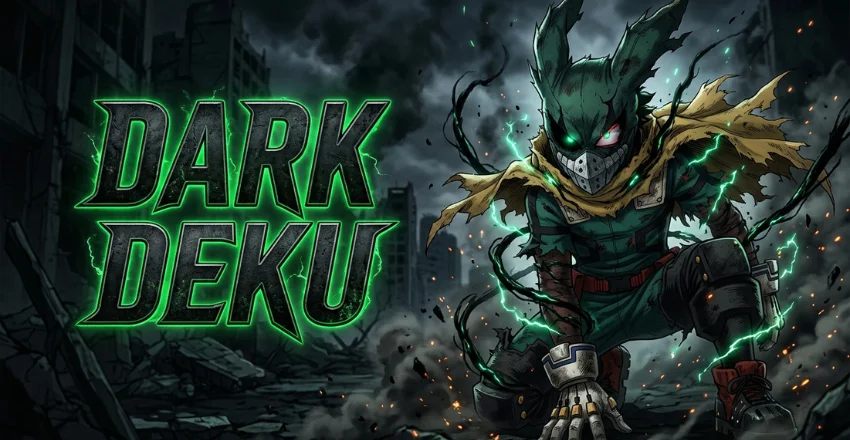
Dark Deku is Izuku Midoriya during one of his most isolated periods in My Hero Academia. He doesn’t become evil or abandon his heroic values. Instead, pressure, exhaustion, and fear push him toward a dangerous belief that he must fight alone.
Quick answer: The darker version of Izuku appears after the Paranormal Liberation War, when he leaves U.A. to protect others. His damaged costume, exhausted body, and intense fighting style reflect physical and emotional strain. Despite the frightening appearance, he remains committed to saving people rather than becoming a villain.
| Key fact | Details |
|---|---|
| Character | Izuku Midoriya |
| Series | My Hero Academia |
| Main storyline | Black Hero/Dark Hero period |
| Anime appearance | Late Season 6 |
| Main motivation | Protect friends from All For One |
| Major abilities | One For All, Blackwhip, Danger Sense, Smokescreen |
| Moral alignment | Hero |
| Biggest problem | Isolation and extreme self-sacrifice |
What Does the Darker Version of Deku Actually Mean?
The nickname describes Midoriya’s appearance and mindset during his solo period. It doesn’t represent a separate personality or an evil transformation. His frightening look develops because his costume is damaged as he keeps fighting and avoids proper rest.
The change also carries an important storytelling purpose. Midoriya has always rushed toward danger when another person needs help. During this period, that positive instinct becomes unhealthy because he stops accepting help himself.
His isolation makes the character look almost villainous from a distance. Blackwhip surrounds him with dark tendrils, while his mask becomes torn and threatening. Yet his actions remain focused on protecting civilians and stopping dangerous criminals.
Readers interested in how visual design shapes fictional roles can also explore MagClone’s coverage of fairy tale characters and their recognizable traits. Strong silhouettes, clothing, and symbols often communicate a character’s role before dialogue begins.
Why Dark Deku Leaves U.A.
Midoriya leaves U.A. because All For One and Tomura Shigaraki are pursuing One For All. He believes staying near his classmates could put them in direct danger. Leaving therefore feels like a protective decision from his perspective.
His reasoning contains a serious flaw, however. He assumes protecting people requires separating himself from them. That choice gradually turns responsibility into isolation and leaves him without the emotional support he needs.
The official anime material presents this stage as a solo battle following the collapse of normal hero society. Midoriya moves through damaged areas while searching for threats and information. His mission grows harder as physical fatigue begins affecting his judgment.
That pressure explains why this storyline differs from a simple costume upgrade. The darker appearance shows the consequences of carrying responsibility without rest. It also prepares the story for his classmates to challenge that approach.
Does Deku Become a Villain?
No, Midoriya does not become a villain during this storyline. He still rescues endangered people and works against All For One’s plans. His methods become harsher toward himself, but his basic moral goal remains unchanged.
This distinction matters because fan-made concepts sometimes portray an evil or villainous version of Midoriya. Those alternate interpretations exist widely in fan art and fiction. They should not be confused with his canonical solo-hero period.
The difference becomes clear when you examine his choices. He never joins the League of Villains or starts targeting innocent people. Instead, he sacrifices his health because he believes constant fighting will keep everyone else safer.
That makes the arc tragic rather than villainous. His strongest heroic quality becomes one of his greatest weaknesses when taken too far. The story questions whether endless self-sacrifice is truly sustainable heroism.
Why Does His Costume Look So Scary?
Midoriya’s costume becomes increasingly damaged as his battles continue. Dirt, torn fabric, his mask, and the movement of Blackwhip create a much harsher silhouette. His exhausted posture makes the effect even stronger.
Earlier versions of his costume looked clean and intentionally heroic. This later design removes much of that approachable quality. The result visually communicates that he no longer cares about his own comfort or appearance.
Blackwhip adds another important element. Its dark energy extends around his body during movement and combat. Combined with his mask, it can make him resemble the villains he is hunting.
The contrast is deliberate because the person underneath remains compassionate. His appearance says “danger,” while his choices still say “hero.” That tension makes the design memorable among My Hero Academia fans.
For more character-focused entertainment coverage, MagClone’s Entertainment section collects guides about television, film, fictional figures, and popular culture.
Which Powers Does He Use During This Phase?
One For All remains the foundation of Midoriya’s abilities. By this point, he can also access powers connected with previous holders. These abilities give him more options for movement, detection, concealment, and capturing opponents.
Blackwhip is especially noticeable because it creates long energy tendrils. He can use them to grab targets, move through environments, and control distance. Its appearance also contributes heavily to his darker visual design.
Danger Sense warns him about threats, while Smokescreen can obscure an area. Float improves his aerial movement during fights. Fa Jin later gives him another way to build and release explosive movement.
More abilities don’t solve his central problem. In fact, greater power encourages him to believe he can handle every threat himself. His physical capability grows while his willingness to depend on friends shrinks.
Why His Solo-Hero Period Matters to the Story
The storyline tests Midoriya’s understanding of what being a hero means. Earlier, he learns that heroes should move when someone needs saving. Here, he must learn that heroes also need support from other people.
His classmates recognize the danger before he fully accepts it. They aren’t trying to stop him from helping others. They want him to understand that teamwork doesn’t weaken his mission.
This idea connects directly with the broader themes of My Hero Academia. The series often contrasts individual symbols with hero communities. Midoriya’s breakdown demonstrates the limits of trying to replace an entire support system with one exhausted person.
MagClone readers who enjoy fictional settings can also visit the site’s Forodwaith guide. That article examines how environment, history, and atmosphere shape another major fantasy setting.
How Class 1-A Brings Him Back
Class 1-A eventually finds their exhausted friend and refuses to leave him alone. Midoriya initially tries to escape because he still believes distance will protect them. His classmates respond by showing how deeply their lives have become connected.
The confrontation is emotional because brute strength cannot solve it. Midoriya has enough power to keep moving, but his classmates understand his habits and motivations. They use those connections to reach someone who has closed himself off.
Iida’s intervention carries particular meaning because Midoriya once helped him during his own dangerous period. Bakugo also confronts their shared history and speaks with unusual openness. Their actions show that accepting support can require as much courage as offering it.
The scene changes what Midoriya’s strength means. He doesn’t become weaker by returning to other people. He becomes better able to function as a hero without destroying himself.
Dark Deku Versus Villain Deku
| Feature | Canon solo-hero version | Villain Deku |
|---|---|---|
| Official story | Yes | No |
| Main goal | Protect people | Varies by fan story |
| Alignment | Hero | Usually villain or antihero |
| Connection to U.A. | Leaves temporarily | Often rewritten completely |
| Appearance | Damaged hero costume | Depends on fan design |
| Source | Manga and anime | Fan fiction, art, alternate universes |
The terms can become confusing because online fandom uses several labels. “Villain Deku” usually describes an alternate-universe interpretation created by fans. The canonical darker period involves the same heroic Midoriya under extreme stress.
Knowing that difference makes discussions easier. A dark design doesn’t automatically mean a character is evil. In this case, the visual transformation mainly reflects exhaustion, isolation, and emotional pressure.
Why Fans Remember This Version So Strongly
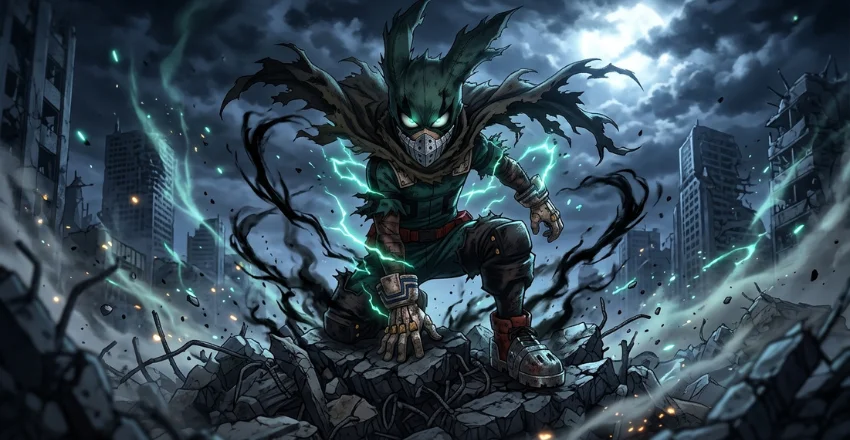
The design provides a dramatic contrast with the optimistic student introduced early in the series. Viewers can understand his condition before anyone explains it. Torn clothing and exhausted movement immediately communicate how far he has pushed himself.
The storyline also changes the usual superhero fantasy. Greater power doesn’t make Midoriya happier or more secure. Each new responsibility makes it easier for him to believe no one else should share the risk.
That conflict makes the phase more than a popular costume. It exposes a weakness hidden inside his strongest personality trait. Midoriya wants to save everyone, but he must learn that “everyone” includes himself.
FAQ About Dark Deku
Is Dark Deku evil?
No, he remains a hero throughout this phase. His appearance becomes threatening because he is exhausted, dirty, injured, and wearing damaged equipment. His decisions still focus on stopping villains and protecting other people.
In which season does his darker form appear?
The anime introduces this major change in the latter part of Season 6. The official anime site identifies Episode 132 as the beginning of the new Black Hero storyline. The solo period continues through several important episodes involving his friends.
Why did Midoriya leave U.A.?
He leaves because enemies are targeting One For All. Midoriya believes separating himself from U.A. will keep his friends safer. His classmates later challenge the idea that he must protect everyone alone.
Is Villain Deku the same character?
Not in the official storyline. Villain versions of Midoriya generally come from fan fiction, fan art, and alternate-universe concepts. The canonical solo version remains committed to becoming a hero.
Why does his mask look frightening?
His mask was designed around a rabbit-like tribute to All Might, but damage changes its appearance. Torn material and shadows make the face look much more menacing. Blackwhip and his exhausted posture strengthen that effect.
What is the main lesson from this storyline?
The storyline argues that self-sacrifice has limits. Helping others doesn’t require rejecting all support. Midoriya becomes a healthier hero when he accepts that his friends can share the burden.
The Meaning Behind Midoriya’s Darkest Hero Phase
Midoriya’s solo period works because his core personality doesn’t suddenly disappear. He still wants to save people, even when his own condition becomes dangerous. The problem is that his heroic instinct grows disconnected from rest, trust, and teamwork.
That makes this transformation one of his clearest character lessons. Strength alone cannot carry every responsibility indefinitely. His return to his classmates shows that dependable relationships are part of heroism, not an obstacle to it.
For more guides about characters, television, movies, and fictional worlds, browse MagClone’s Entertainment coverage. The site regularly publishes explainers designed to make complicated stories easier to follow.