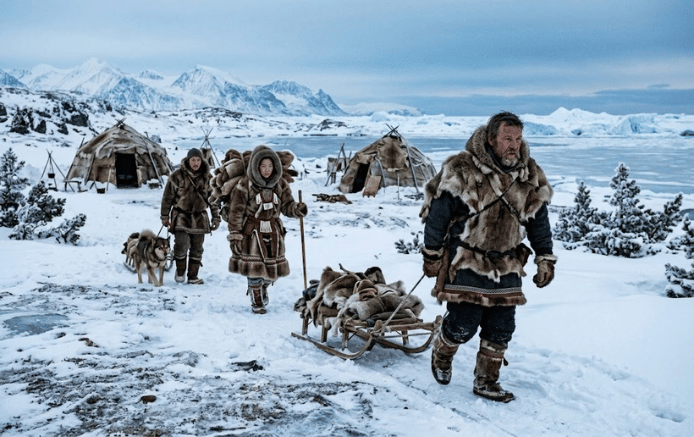
Forodwaith is Tolkien’s vast northern region beyond the settled lands of northwestern Middle-earth. It is cold, remote, and closely tied to ancient memories of Morgoth. The name can also describe the people who once inhabited these northern lands.
Quick answer: Tolkien describes this northern territory as the Northern Waste, lying beyond Angmar and the Grey Mountains. The region later became associated with the Lossoth of Forochel. Amazon’s The Rings of Power also uses the frozen north for important scenes involving Galadriel and Sauron. Fans of screen fantasy can find related coverage in Magclone’s Entertainment section.
| Key fact | Details |
|---|---|
| Location | Far north of Middle-earth |
| Other name | Northern Waste |
| Nearby regions | Angmar, Forochel, Grey Mountains |
| Known inhabitants | Ancient northern Men and later the Lossoth |
| Name origin | Sindarin words connected with “north” and “people” |
| Major Third Age event | Arvedui’s flight and death near the Icebay of Forochel |
| Screen connection | Featured in The Rings of Power |
| Canon status | The region and northern peoples come from Tolkien’s writings |
Where Is Forodwaith in Middle-earth?
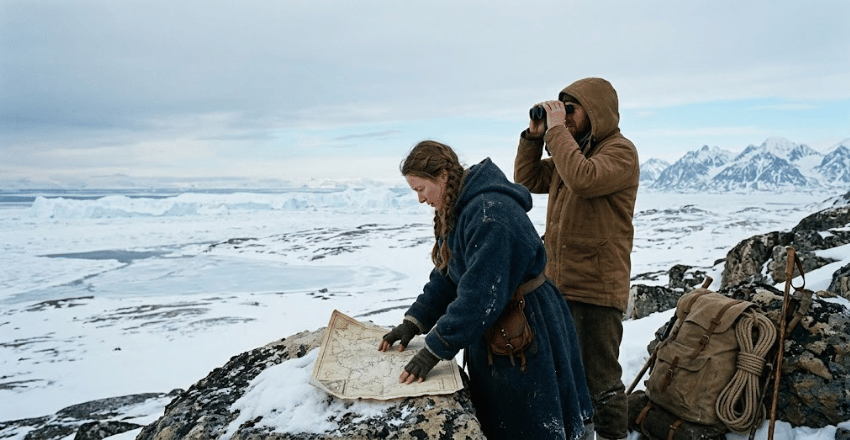
The region lies north of Angmar, Mount Gundabad, and the Grey Mountains. Tolkien’s maps present it as a broad northern expanse rather than a defined kingdom. Forochel occupies part of this colder northern territory toward the northwest.
That position places the frozen north above Eriador and much of the familiar western map. It is not another name for Angmar, although the two areas sit close together. Angmar was a political realm, while the Northern Waste describes a much larger geographical region.
Readers sometimes struggle with the map because different editions created visual ambiguity. Christopher Tolkien’s general map printed “Northern Waste” and the Sindarin name in nearby positions. His later notes indicate that the terms were intended as equivalents rather than separate territories.
What Does the Name Mean?
The name comes from Sindarin, one of Tolkien’s developed Elvish languages. The element forod means “north,” while gwaith can refer to a people or region. That creates meanings such as “Northmen,” “northern people,” or “north-region.”
This double meaning explains why the term appears in discussions of both geography and population. Tolkien often connected place names with the peoples associated with those places. Here, the northern inhabitants appear to have given their name to the country itself.
The distinction matters when reading reference works or online discussions. One passage may describe a frozen territory, while another describes an ancient group of Men. Context normally makes clear which meaning applies.
Why Was the Northern Waste So Cold?
Tolkien linked the region’s severe cold to Morgoth’s ancient northern power. His realm lay in the far north during the Elder Days. The lingering cold therefore carries a mythic connection with Middle-earth’s oldest conflicts.
Tolkien did not provide modern climate data or a fixed temperature range for this territory. Claims assigning precise temperatures should therefore be treated cautiously. The books describe harsh conditions through geography, survival, ice, storms, and the habits of northern peoples.
The cold also shapes how readers understand the region. It is geographically distant from the Shire, Gondor, and Rohan. Its isolation makes events there feel removed from the better-known centers of Third Age history.
Who Lived in the Frozen North?
Ancient Men known by the same northern name inhabited these lands in earlier ages. Tolkien gives readers little detailed information about their society. He mainly describes them as hardy people accustomed to severe cold.
By the Third Age, the Lossoth represented their best-known surviving descendants. They lived mainly around the Cape and Icebay of Forochel. Tolkien also calls them the Snowmen of Forochel.
Their way of life reflected their environment. They traveled across ice and used sledges suited to frozen ground. They also understood local weather well enough to recognize dangers outsiders could miss.
Forochel and the wider Northern Waste are not the same place. Forochel is a region within the greater northern territory. The Lossoth were especially associated with Forochel, not every distant part of the north.
Arvedui and the Most Important Third Age Story
The region enters one of Tolkien’s major northern histories through King Arvedui. He was the last king of Arthedain, the final surviving kingdom descended from Arnor. Angmar’s attack forced him to flee north during the winter of Third Age 1974.
Arvedui eventually reached the Lossoth near the Icebay of Forochel. They sheltered and fed him despite their fear of the Witch-king. Their help kept the king and his followers alive until Círdan arrived.
A rescue ship reached the area in 1975. The Lossoth warned Arvedui against leaving because they sensed dangerous weather. He boarded anyway, and the vessel was later destroyed by ice and storm.
Arvedui died with his companions and the ship’s crew. Two northern palantíri were also lost in the disaster. His death ended the kingship of Arthedain before Arnor’s later restoration under Aragorn.
Were There Dragons in the Northern Waste?
Tolkien states that dragons lived in wastes beyond the Grey Mountains. Cold-drakes later attacked Dwarven settlements in those northern areas. The exact boundaries of those dragon-haunted wastes are not always certain.
That uncertainty matters because fan maps often present speculative details as fixed geography. The Withered Heath is strongly associated with dragons elsewhere in Tolkien’s writings. Not every dragon reference can be assigned confidently to one exact northern location.
Readers should therefore separate established text from later interpretation. The frozen north certainly fits Tolkien’s dragon traditions. Specific lairs, borders, and populations often depend on inference rather than direct description.
Tolkien Canon Versus The Rings of Power
| Topic | Tolkien’s writings | The Rings of Power |
|---|---|---|
| Northern region | Established as the Northern Waste | Used as a major frozen setting |
| Ancient evil | Cold linked with Morgoth’s northern realm | Connected visually with Sauron’s history |
| Galadriel expedition | Not described in this form | Shown searching the frozen north |
| Sauron scenes | No matching scene in Tolkien’s narrative | Season Two adds major material there |
| Detail level | Limited geographical and historical references | Expanded visually for television |
Amazon’s series introduced many viewers to the name through its opening episode. The episode soundtrack even includes a track titled “Forodwaith,” composed by Bear McCreary. That confirms how clearly the location was identified within the production.
The television series expands on material Tolkien described only briefly. Galadriel’s northern search and the ruined fortress are narrative choices in the adaptation. They should not be treated as scenes directly retold from Tolkien’s published story.
Season Two returned to the location during material involving Sauron’s earlier history. VFX studio The Yard specifically describes work on the frozen northern setting and Sauron’s transformation sequence. This gives the region greater screen importance than it receives in Tolkien’s main narrative.
That difference does not make the place itself an invention. Tolkien created the land, its northern associations, and its ancient inhabitants. The series builds new dramatic events inside an established part of Middle-earth.
Why This Region Matters to Tolkien’s Geography
The frozen north helps show that Middle-earth extends far beyond the Fellowship’s journey. Tolkien created distant areas that rarely enter the central narrative. Their existence gives his maps a stronger sense of scale and forgotten history.
The region also connects several historical periods. Morgoth’s shadow reaches back toward the Elder Days. Arvedui’s tragedy links the territory with Arnor, Angmar, the Lossoth, and the fate of the northern Dúnedain.
Modern adaptations add another layer by turning a lightly described place into a major visual setting. That has made the name more familiar to newer viewers. It has also increased searches about where the location sits within Tolkien’s larger mythology.
Frequently Asked Questions
Is Forodwaith the same as Forochel?
No, the names describe different geographical scales. Forochel is an icy northwestern region within the greater Northern Waste. Its best-known features include the Cape and Icebay of Forochel.
Is the frozen northern land part of Tolkien’s canon?
Yes, Tolkien refers to the northern territory and its ancient inhabitants in published material. Important references appear in The Lord of the Rings appendices and Unfinished Tales. The television adaptation adds new events rather than inventing the underlying place.
Did the Lossoth live there?
The Lossoth lived mainly around the Cape of Forochel and nearby shores. Tolkien identifies them as remnants of the ancient northern people. Their history becomes especially important during Arvedui’s final days.
Did Sauron live there in Tolkien’s books?
Tolkien does not give the location the same Sauron storyline shown by Amazon. The series uses the northern setting for adaptation-specific events involving his past. Viewers should distinguish those scenes from the published legendarium.
A Small Place on the Page With a Large History
Tolkien gives the frozen north far less narrative space than Gondor, Rohan, or the Shire. Yet its few references connect language, geography, ancient evil, dragons, Arnor, and the Lossoth. Those connections make it one of Middle-earth’s most intriguing remote regions.
The television adaptation has brought fresh attention to that history. Readers who discovered the name through Amazon can trace it back to Tolkien’s maps and appendices. That route reveals a place whose importance comes from history rather than frequent appearances.
For more screen and pop-culture coverage, read Magclone’s Jamie Foxx movie guide and Kristen Stewart profile. These broader entertainment pages provide natural internal paths for readers browsing film and television topics.