
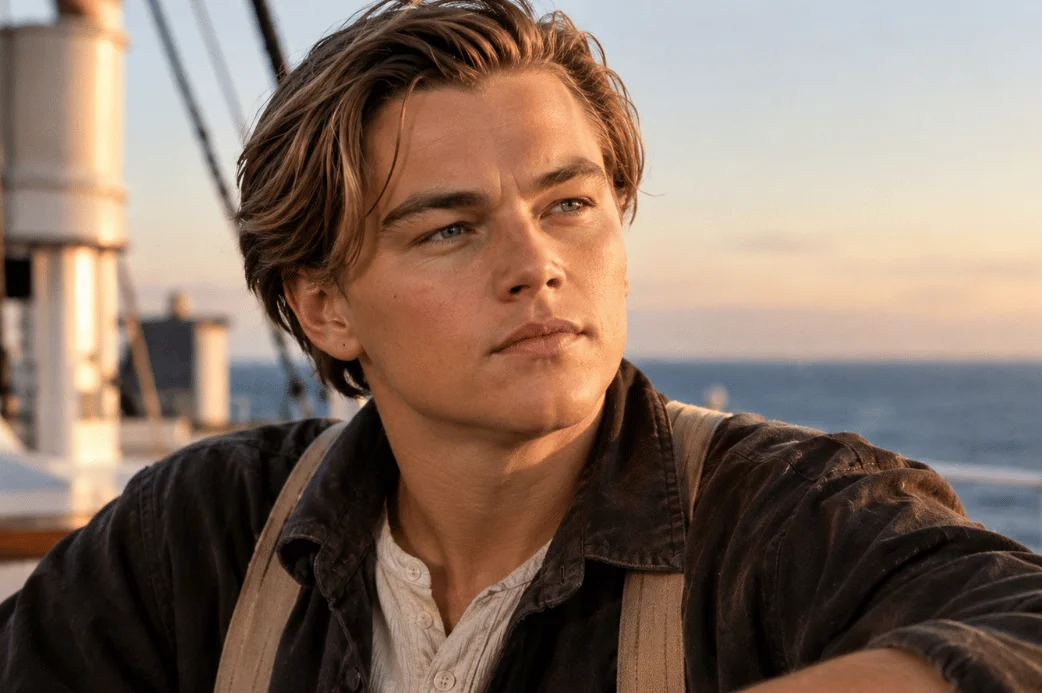
Jack Dawson is the fictional young artist played by Leonardo DiCaprio in James Cameron’s 1997 film Titanic. He falls in love with Rose DeWitt Bukater during the doomed ship’s maiden voyage. Although his story feels remarkably real, historical records do not identify him as an actual passenger.
The confusion has one fascinating source. A real Titanic crewman named Joseph Dawson died in the disaster and was buried under a marker reading “J. Dawson.” Cameron’s fictional hero was not based on that man, making their shared surname an extraordinary coincidence.
Quick answer: Jack was created for Titanic and was never a real passenger aboard the ship. Leonardo DiCaprio played the character as a young American artist who meets Rose and dies after the sinking. A real crewman named Joseph Dawson existed, but Cameron did not base his character on him.
Jack Dawson at a Glance
| Key fact | Details |
|---|---|
| Character | Jack Dawson |
| Film | Titanic |
| Release year | 1997 |
| Actor | Leonardo DiCaprio |
| Character birthplace | Chippewa Falls, Wisconsin |
| Approximate birth year | 1892 |
| Approximate age | 20 |
| Occupation | Artist and traveler |
| Passenger class | Third class |
| Romantic interest | Rose DeWitt Bukater |
| Fate | Dies following the sinking |
| Real historical person? | No |
| Real “J. Dawson” | Joseph Dawson, Titanic crewman |
Encyclopedia Titanica describes the movie character as being born around 1892 and approximately 20 years old. The fictional biography identifies Chippewa Falls, Wisconsin, as his hometown. It also describes him as an artist who traveled extensively before boarding the Titanic.
Key Takeaways
- Jack is a fictional character created for James Cameron’s Titanic.
- Leonardo DiCaprio portrays him as an adventurous young artist.
- Rose DeWitt Bukater is also fictional.
- Jack wins his third-class passage during a poker game in the film.
- His romance with Rose provides the emotional center of the movie.
- He dies after the Titanic sinks in the North Atlantic.
- Joseph Dawson was a real Titanic crewman, but he was not the model for Jack.
- Joseph’s “J. Dawson” grave later became closely associated with the movie.
Was Jack Dawson a Real Person?
No historical evidence shows that the movie character existed. Titanic mixes fictional leads with people who genuinely sailed aboard the ship. Jack and Rose belong to the fictional side of that combination.
James Cameron used their romance to place viewers inside a real historical catastrophe. Through them, audiences move between different passenger classes and parts of the ship. Their invented relationship therefore connects many historically inspired scenes without claiming to reproduce one passenger’s biography.
This approach also explains why viewers sometimes remember the movie as more historically literal than it is. Real figures appear beside fictional characters throughout the story. The combination makes the invented romance feel closely tied to documented history.
Readers interested in other memorable screen characters can explore Magclone’s Paige Swanson character guide. Magclone also covers film and television figures across its broader entertainment section.
Who Was Jack Before Boarding the Titanic?
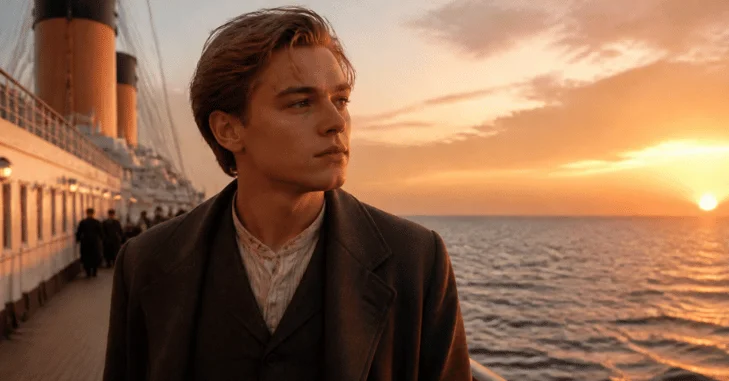
The movie presents him as a young American without wealth, status, or a permanent home. He says he comes from Chippewa Falls, Wisconsin, and has traveled abroad. His artistic talent becomes important after Rose asks him to draw her.
He does not begin the voyage with a planned Titanic reservation. Jack and his friend Fabrizio win third-class tickets during a poker game shortly before departure. They rush to the ship and board before it leaves Southampton.
That beginning immediately establishes his personality. He values freedom, experience, friendship, and opportunity more than money or social standing. His outlook sharply contrasts with Rose’s restrictive first-class life.
Why Does He Fall in Love With Rose?
Jack first encounters Rose when she feels trapped by her circumstances. She comes from an elite social environment but has little control over her future. Her engagement to Cal Hockley represents the security and expectations surrounding her life.
Jack offers the opposite experience. He speaks to her directly and treats her as someone capable of choosing her own path. Their connection develops rapidly because each represents something missing from the other’s world.
The relationship also supports the film’s class themes. First-class wealth surrounds Rose, while Jack travels in third class. Their romance allows the story to move across social boundaries that shaped life aboard the ship.
For more actor-focused reading, Magclone’s Randy Quaid biography examines another long Hollywood career. Its Jamie Foxx movie guide also looks at major performances across several genres.
Why Jack Dawson Became Such an Iconic Titanic Character
Much of the character’s popularity comes from his role as an outsider. He enters the story with little money but approaches life confidently. That makes him an immediate contrast to the wealthy passengers surrounding Rose.
Leonardo DiCaprio’s performance also arrived during a major stage of his rise as a Hollywood star. The film turned Jack into one of his most recognizable roles. Scenes involving the ship’s bow, Rose’s portrait, and their escape became enduring pieces of popular culture.
The character also gives the disaster a personal scale. Titanic’s sinking involved more than statistics, ship design, and timelines. Following two young characters makes the unfolding emergency easier for audiences to experience emotionally.
That emotional effect helps explain why viewers still search for his biography decades later. The performance can make an invented person feel historically documented. Separating film canon from passenger records is therefore essential.
How Does Jack Die in Titanic?
Jack survives the ship’s sinking itself and reaches the freezing North Atlantic with Rose. They find a floating section of debris that can keep Rose mostly above the water. Jack remains in the water while helping her stay on it.
He eventually becomes unresponsive as exposure to the freezing water overwhelms him. Rose later releases his body after realizing he has died. She survives and is rescued.
The scene has inspired years of arguments about whether both characters could have used the floating debris. That debate concerns the movie’s staging rather than historical passenger evidence. Jack’s death remains the intended conclusion of his fictional story.
The Real J. Dawson: Who Was Joseph Dawson?
A genuine Dawson did sail on Titanic, which creates the story’s most famous historical coincidence. His name was Joseph Dawson, not Jack. He was an Irish crew member who worked as a coal trimmer in Titanic’s engineering department.
Joseph was born in Dublin in September 1888. Encyclopedia Titanica records him as 23 years and seven months old when the disaster occurred. He boarded at Southampton and died when the Titanic sank on April 15, 1912.
His work was far removed from the fictional artist’s life. Trimmers helped manage coal needed for the ship’s furnaces. These workers performed demanding labor deep inside the vessel.
Joseph’s body was later recovered by the cable ship Mackay-Bennett. He was identified as body number 227 and buried at Fairview Lawn Cemetery in Halifax. His grave bears the simple inscription “J. Dawson.”
Did James Cameron Get the Name From Joseph Dawson?
Available evidence says no. Cameron’s character had already been created without knowledge of Joseph Dawson’s connection to Titanic. The real crewman’s existence became widely discussed after the movie generated renewed interest.
That coincidence created a compelling myth. Fans discovered a Titanic victim’s grave carrying the same initial and surname as DiCaprio’s character. Some began treating the grave as though it belonged to the fictional hero.
The distinction matters because Joseph deserves recognition for his own life. He was not simply a real-world version of a movie character. He was one of the actual crew members who died in the disaster.
Why the J. Dawson Grave Became Famous
Fairview Lawn Cemetery in Halifax contains the graves of many Titanic victims. Joseph’s marker attracted extraordinary attention after the film became a worldwide success. Visitors left flowers, notes, movie memorabilia, and other tributes.
The grave’s fame shows how strongly fiction can influence public memory. Visitors knew the name from the movie before learning about the real person beneath the stone. Joseph’s identity then became connected with a fictional romance he never experienced.
That connection can still provide a useful historical doorway. Someone drawn to the grave because of the film may leave knowing more about Titanic’s real crew. The important step is keeping Joseph’s documented story separate from Jack’s screenplay.
Jack and Rose: Were Either of Them Real?
Neither central character was an actual Titanic passenger. Jack and Rose were created for the film’s romantic storyline. Their relationship should not be read as a documented love story from the 1912 voyage.
The film does feature historical individuals around them. That mix gives the story a strong sense of authenticity without making its central couple real. Viewers therefore need to distinguish between dramatized history and documented biography.
Rose has also attracted questions about possible inspirations. Certain creative influences have been discussed in relation to her characterization. Those influences still do not make Rose DeWitt Bukater an actual passenger.
Why the Character Still Matters
Jack works as more than a romantic lead. His position outside wealthy society lets viewers enter spaces Rose would otherwise rarely see. His presence also strengthens the movie’s contrast between freedom and obligation.
His character has remained recognizable because his story has a complete emotional arc. He arrives without status, changes Rose’s understanding of her life, and disappears during the disaster. Rose’s later choices show how strongly that brief relationship affected her.
Fans interested in Hollywood careers can also read Magclone’s Kristen Stewart profile. These entertainment profiles provide broader context on actors, screen roles, and popular culture.
Frequently Asked Questions About Jack Dawson
Is Jack Dawson real?
No. Jack Dawson is a fictional character created for the 1997 film Titanic. Leonardo DiCaprio played him, while a different man named Joseph Dawson genuinely worked aboard the ship.
The shared surname caused considerable confusion after the film’s release. Joseph’s grave reads “J. Dawson,” which encouraged some visitors to associate it with the movie character.
How old was Jack in Titanic?
The fictional character is generally described as about 20 years old. Encyclopedia Titanica lists an approximate birth year of 1892 and an age of 20.
Leonardo DiCaprio was older than the character while making the movie. The age discussed here refers to Jack within the story, not the actor.
Where was Jack from?
The film identifies his home as Chippewa Falls, Wisconsin. He describes a mobile life that includes travel outside the United States. His lack of permanent wealth reinforces the story’s class contrast.
Chippewa Falls is a real Wisconsin city, but that does not make the character historical. It is part of the fictional biography created for the film.
Was Rose a real Titanic passenger?
No. Rose DeWitt Bukater was also fictional. Kate Winslet played her as a first-class passenger caught between family expectations and her desire for independence.
The movie surrounds her with real historical details and real passengers. That combination sometimes leads viewers to assume her personal story was documented.
Who was the real J. Dawson?
The real man was Joseph Dawson, a 23-year-old Irish crew member. He worked as a trimmer and died during the Titanic disaster.
His recovered body was buried in Halifax’s Fairview Lawn Cemetery. The “J. Dawson” inscription later attracted attention from fans of the movie.
Is Jack’s grave in Halifax?
No grave belongs to the fictional character because he never existed. The famous marker belongs to Joseph Dawson.
Visiting the site can still connect movie fans with Titanic history. Visitors should remember that the person buried there had his own documented life.
Final Takeaway
Jack remains one of cinema’s best-known fictional passengers because Titanic places him inside a meticulously recreated historical tragedy. His romance, personality, and death belong to James Cameron’s screenplay, not the passenger records. The character succeeds because fiction gives audiences a personal route into a much larger historical event.
The real story behind “J. Dawson” adds another layer without turning the fiction into fact. Joseph Dawson was a young Irish crewman who died aboard the Titanic and rests in Halifax. Remembering both stories clearly preserves the movie’s power while giving the real victim the identity he deserves.