Fairy tale characters include famous heroes, villains, magical helpers, talking animals, and ordinary people facing extraordinary problems. Cinderella, Snow White, Rapunzel, and Little Red Riding Hood are among the most recognizable examples. Their stories remain familiar because each character represents simple conflicts involving courage, danger, kindness, greed, cleverness, or change.
Quick answer: Classic fairy tale characters include Cinderella, Snow White, Rapunzel, Little Red Riding Hood, Hansel and Gretel, Rumpelstiltskin, and the Big Bad Wolf. Other familiar figures include magical helpers, witches, princes, giants, talking animals, and enchanted creatures. Many originated in oral traditions before appearing in famous written collections.
| Character | Story | Main Role | Memorable Feature |
|---|---|---|---|
| Cinderella | Cinderella | Heroine | Glass slipper and changed fortune |
| Snow White | Snow White | Heroine | Poisoned apple and magic mirror |
| Rapunzel | Rapunzel | Heroine | Long hair and tower |
| Little Red Riding Hood | Little Red Riding Hood | Heroine | Red hood and dangerous wolf |
| Big Bad Wolf | Several traditional tales | Villain | Deception and danger |
| Hansel and Gretel | Hansel and Gretel | Heroes | Escape from the witch. |
| Rumpelstiltskin | Rumpelstiltskin | Magical antagonist | Spins straw into gold |
| Puss in Boots | Puss in Boots | Trickster/helper | Clever schemes |
| Frog Prince | The Frog Prince | Enchanted character | Transformation |
| Fairy Godmother | Cinderella | Magical helper | Helps Cinderella attend the ball |
What Are Fairy Tale Characters?
Fairy tale characters are figures who appear in traditional stories involving magic, unusual events, or impossible challenges. They may be human, animal, supernatural, royal, or something between those categories. Their personalities are often clear enough for listeners to understand their roles quickly.
A princess may face an unfair test, while a witch creates the central danger. A clever animal might solve a problem that stronger characters cannot overcome. These recognizable roles helped storytellers pass tales from one generation to another.
Not every familiar storybook figure comes from the same tradition. Fairy tales overlap with folklore, literary tales, nursery stories, myths, and later children’s fiction. That distinction explains why modern character lists sometimes include figures that traditional folklorists would classify differently.
Readers interested in storytelling and popular culture can also explore Magclone’s Entertainment section. The site’s broader coverage provides a natural home for articles about stories, adaptations, and familiar fictional figures.
20 Famous Fairy Tale Characters to Know
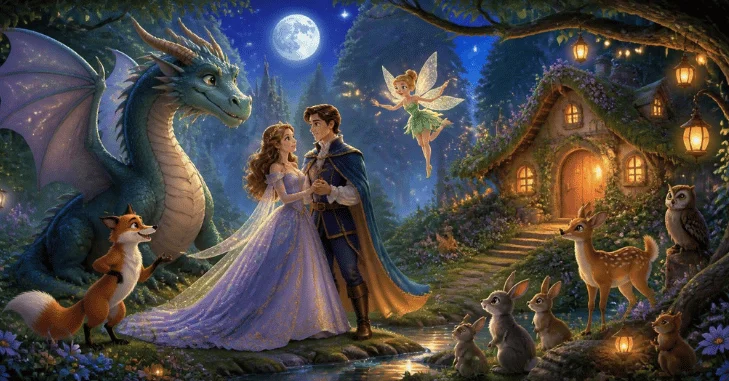
The best-known names come from stories recorded or rewritten across different countries and centuries. Several have changed considerably as publishers, filmmakers, and other storytellers adapted them. Here are 20 characters and character groups that remain especially recognizable to American readers.
- Cinderella: A mistreated young woman whose circumstances change after magical help allows her to attend a royal event. Charles Perrault’s 1697 French version helped establish details familiar to English-speaking audiences.
- Snow White: A young heroine pursued by a jealous queen who consults a magic mirror. The Brothers Grimm published a German version in their nineteenth-century collection.
- Rapunzel: A girl confined in a tower and known for her extraordinarily long hair. The Grimms published their version in 1812, although earlier European versions influenced the story.
- Little Red Riding Hood: A young girl who encounters a dangerous wolf while traveling to her grandmother’s home. Charles Perrault and the Brothers Grimm produced influential written versions with notable differences.
- The Big Bad Wolf: The wolf is a threatening figure associated with Little Red Riding Hood and The Three Little Pigs. He commonly represents danger, deception, appetite, and the need for caution.
- Hansel and Gretel: These siblings become lost and encounter a witch living in an unusual edible house. Their survival depends on courage, cooperation, and quick thinking.
- Rumpelstiltskin: This mysterious figure can perform the impossible task of spinning straw into gold. His story also centers on bargains, promises, names, and the consequences of desperate agreements.
- The Frog Prince: An enchanted prince appears in the form of a frog before returning to human form. Different versions handle his transformation differently, showing how oral and written tales can change.
- Puss in Boots: This clever cat uses language, planning, and deception to improve his master’s fortunes. The character is a classic example of the resourceful trickster who succeeds through intelligence.
- Sleeping Beauty: A princess falls into an enchanted sleep connected with a curse. The story exists in several European forms and became one of the most familiar princess tales.
- Beauty: The heroine of Beauty and the Beast learns to judge beyond frightening appearances. Gabrielle-Suzanne de Villeneuve published an influential French version in 1740.
- The Beast: A cursed figure whose frightening exterior hides a more complicated identity. His transformation makes the story one of the clearest examples of physical change reflecting an emotional journey.
- The Little Mermaid: Hans Christian Andersen’s literary tale follows a mermaid who longs to enter the human world. The original story differs in significant ways from later screen adaptations familiar to many Americans.
- The Evil Queen: Snow White’s jealous adversary uses disguise and magic against the young heroine. Her mirror and poisoned apple have become instantly recognizable story symbols.
- The Fairy Godmother: This magical helper allows Cinderella to change her immediate circumstances. She represents a common fairy-tale role in which supernatural assistance appears when a hero faces an impossible obstacle.
- The Witch from Hansel and Gretel: She initially offers apparent comfort before revealing herself as a threat. The character turns a place of food and shelter into a warning about deceptive appearances.
- The Three Little Pigs: Three pigs build homes with different materials while preparing for a wolf’s attack. Their tale is often associated with preparation, persistence, and the consequences of choices.
- Goldilocks: A curious girl enters the bears’ home and tests their food, chairs, and beds. The repeated pattern of three makes the story easy to remember and retell.
- Jack: The hero of Jack and the Beanstalk exchanges a cow for magical beans. His adventure combines risk, giants, treasure, and the rapid reversal of a family’s fortunes.
- The Gingerbread Man: This living cookie runs from a series of pursuers while boasting that they cannot catch him. His confidence eventually meets a clever opponent, making the story both playful and cautionary.
Heroes, Villains, and Magical Helpers
Many stories become easier to understand when characters are grouped by what they do. Heroes face tests, villains create danger, and magical helpers make seemingly impossible outcomes possible. Tricksters occupy a more complicated position because their cleverness may help themselves or others.
Typical heroes include Cinderella, Gretel, and characters who endure danger without giving up. Villains include threatening witches, jealous queens, giants, and predatory wolves. Helpers include fairies, enchanted animals, wise figures, and supernatural beings that provide information or gifts.
These categories aren’t rigid. A character’s role can change between versions of the same story. Modern retellings often add motives and personality traits that older versions left unexplained.
For more general learning-focused content, readers can browse Magclone’s Education section. Comparing character roles is especially useful for students learning plot, conflict, motivation, and narrative structure.
Where Famous Characters Came From
Many well-known tales existed orally before collectors or writers placed them in books. That history means there often isn’t one definitive original version. Details changed as stories crossed languages, regions, and generations.
Charles Perrault published influential French versions of several famous tales during the seventeenth century. Jacob and Wilhelm Grimm later collected and edited stories that became central to the German fairy-tale tradition. Hans Christian Andersen followed a different path by writing literary tales associated strongly with an individual author.
Beauty and the Beast offers a useful example of this complicated history. Gabrielle-Suzanne de Villeneuve published a lengthy version in 1740. Jeanne-Marie Leprince de Beaumont later produced a shorter 1756 version that strongly influenced subsequent retellings.
Why These Characters Are So Memorable
Strong visual symbols give many story figures an immediate identity. Cinderella has her slipper, Rapunzel has her hair, and Little Red Riding Hood has her red garment. Snow White’s story has a mirror and an apple, while Jack’s adventure has an enormous beanstalk.
Their problems are also easy to understand. A child can recognize unfair treatment, fear, jealousy, hunger, curiosity, or the desire to escape danger. Adults can read the same stories through questions about family, power, promises, identity, and social expectations.
Repetition gives the tales another advantage. Three wishes, three brothers, three attempts, and repeated warnings create patterns listeners can anticipate. Those structures made oral stories easier to remember before books became widely accessible.
Traditional Tales Versus Modern Adaptations
Many Americans first encounter these characters through movies, television, or illustrated children’s books. Those adaptations can become more familiar than earlier printed versions. Yet a modern character’s name, personality, relationships, and ending may differ from older sources.
For example, popular screen versions often soften violence or give protagonists more detailed personalities. Modern writers may also tell a familiar story from the villain’s viewpoint. These changes keep old characters usable while reflecting new audiences and expectations.
That difference matters when researching a character for school or general reading. Check whether your source discusses folklore, a particular written version, or a film adaptation. Treating every version as identical can create confusion about a tale’s history.
Magclone readers looking for broader culture and everyday-interest material can also visit the site’s Lifestyle section. It complements the site’s entertainment and educational coverage without duplicating this topic.
Common Traits of Fairy Tale Characters
Traditional figures are often built around a few strong traits rather than detailed psychological profiles. A hero may be brave or kind, while a villain may be jealous, greedy, cruel, or deceptive. These sharp contrasts allow the conflict to develop quickly.
Magic frequently tests those traits instead of replacing them. A mysterious gift may help a generous character, while a bargain exposes another person’s greed. Transformations can make an internal lesson visible through an external change.
Modern adaptations often complicate this pattern. Villains may receive backstories, and princesses may become more active in solving their problems. The basic character types remain recognizable even when writers reverse or question older expectations.
Why Fairy Tale Characters Still Matter
These figures remain useful because storytellers can reshape them without completely erasing their identities. A red hood, glass slipper, magic mirror, or tower can signal an entire story within seconds. That familiarity makes traditional tales useful material for novels, films, games, advertising, theater, and classroom activities.
They also give readers a simple way to discuss character development. Students can compare what a person wants, what blocks that goal, and how choices affect the ending. More advanced readers can compare different versions and ask why storytellers changed particular details.
The most interesting approach is often to read more than one version. Doing so shows that folklore isn’t a fixed script preserved unchanged for centuries. It is a storytelling tradition shaped by the people who tell, collect, publish, translate, and adapt it.
FAQ About Fairy Tale Characters
Who are the most popular fairy tale characters?
Cinderella, Snow White, Rapunzel, Little Red Riding Hood, and the Big Bad Wolf are among the most widely recognized examples. Hansel and Gretel, Sleeping Beauty, Rumpelstiltskin, and Puss in Boots are also familiar across books and adaptations. Recognition varies by country, generation, and the versions people encountered as children.
What are the four main types of fairy tale characters?
A practical way to group them is as heroes, villains, helpers, and tricksters. Heroes confront the main problem, while villains create or intensify conflict. Helpers assist, and tricksters use cleverness to change events.
Are all fairy tale characters princesses and princes?
No, royalty forms only one part of traditional storytelling. These tales also feature peasants, children, merchants, witches, giants, talking animals, fairies, wolves, and magical creatures. Some famous stories contain no princess as the central character.
Is the Big Bad Wolf a fairy tale character?
Yes, the wolf is a familiar antagonist in traditional stories, especially Little Red Riding Hood and The Three Little Pigs. Different versions give the animal different actions and endings. The wolf has become a broader symbol of hidden or approaching danger.
Did Disney create Cinderella, Snow White, or Rapunzel?
No, those characters and their stories existed long before their modern animated adaptations. Influential versions appear in works connected with writers and collectors such as Charles Perrault and the Brothers Grimm. Screen adaptations changed or popularized many details for newer audiences.
Why do different versions of the same character exist?
Many tales circulated orally and changed as people retold them. Writers, collectors, translators, publishers, and filmmakers then created additional versions. Differences in time, culture, audience, and purpose can therefore produce noticeably different portrayals of the same figure.
Keep Exploring Classic Stories
Learning the names is only the beginning. Reading several versions reveals how the same character can change while the core story remains recognizable. Choose Cinderella, Rapunzel, or Little Red Riding Hood and compare an older text with a modern adaptation to see those differences clearly.