
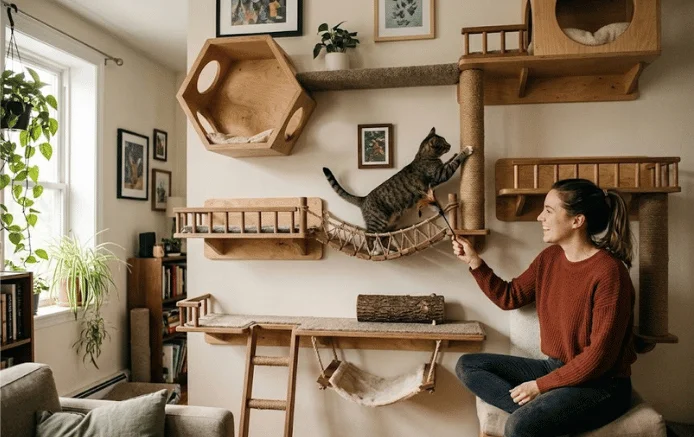
Blank wall space can become useful territory for an indoor cat. A well-planned cat wall adds climbing, resting, and observation space without taking floor area. The strongest designs fit your cat’s body, mobility, habits, and the room’s structure.
A useful setup combines stable shelves, grippy landing surfaces, easy step-to-step spacing, and one generous resting perch. Mount every piece with hardware suited to the wall and the manufacturer’s load guidance. In multi-cat homes, build more than one exit so one cat cannot block another.
| Planning point | Practical starting point |
|---|---|
| Main goal | Create safe vertical territory without using floor space |
| Best basic mix | Steps, wider shelves, and one resting perch |
| Spacing | Start around 12–18 inches vertically for healthy adults |
| Surface | Use carpet, cork, sisal, or another grippy material |
| Multi-cat design | Provide separate resting spots and more than one route |
| Rental option | Consider freestanding or tension-based systems if drilling is restricted |
Why Vertical Space Matters Indoors
The Feline Veterinary Medical Association lists suitable indoor environments as a foundation of feline physical and emotional health. Its behavior guidance also describes vertical space and hiding options as important indoor resources. That makes wall-mounted furniture useful when floor space is limited.
Height can also change how cats share a room. One cat may prefer a high lookout, while another chooses a lower covered perch. Giving them choices can reduce crowding around one favored chair, window, or cat tree.
Which Type of Wall-Mounted Cat Furniture Fits Your Home?
Most setups combine several component types rather than using one piece repeatedly. The right mix depends on your wall, your cat’s mobility, and your available floor area. Compare the main options before buying a full set.
| Type | Best for | Main advantage | Main drawback |
|---|---|---|---|
| Floating shelf | Healthy adult cats | Simple route building | Needs secure mounting and traction |
| Small step platforms | Kittens, seniors, compact layouts | Creates shorter transitions | Too small for long resting |
| Hammock or fabric perch | Cats that like soft resting spots | Adds comfort | Fabric can wear or sag |
| Box or cubby | Shy cats and multi-cat homes | Adds privacy and cover | Heavier and harder to mount |
| Bridge | Long wall runs | Connects separate zones | Needs strong anchor points |
| Tension or freestanding tower | Rentals | May avoid wall drilling | Uses some floor or ceiling contact |
For most homes, choose several steps, two wider shelves, and one comfortable resting perch. This mix supports movement without making the route complicated. Renters should favor freestanding or tension-based systems when the lease limits drilling.
How to Plan a Cat Wall Your Cat Will Use
Start by watching routes your cat already chooses. Notice favorite furniture heights, window ledges, and places where your cat hesitates before jumping. Those observations are more useful than copying a showroom photo.
- Choose an easy entry point. Start near a sofa, cat tree, bench, or low shelf your cat already uses.
- Create a clear upward route. Each next landing should be visible before your cat commits to the move.
- Plan the way down too. Cats need a comfortable descent instead of one large final drop.
- Use at least one wide resting perch. Your cat should be able to turn, settle, and change position safely.
- Add traction at every landing. Bare slick surfaces can make confident cats hesitate after one poor landing.
- Keep doors and busy walkways clear. Avoid routes where people can bump shelves or surprise a resting cat.
- Add another exit for shared spaces. Multiple routes help prevent one cat from controlling the whole system.
Current shelf guides often use 12–18 inches as a starting vertical gap for healthy adult cats. Kittens, seniors, and less mobile cats usually need shorter transitions. Treat those numbers as planning references, then adjust them to your cat’s normal jumping comfort.
A simple test can prevent expensive mistakes. Use painter’s tape to mark each platform on the wall before drilling. Then compare those heights with furniture your cat already reaches confidently every day.
Choose Surfaces and Resting Spots for Real Daily Use
Traction matters because climbing furniture is used during takeoff and landing, not only during rest. Carpet, cork, sisal, and textured pads can give paws a more secure surface. Choose materials that attach firmly and can be cleaned or replaced.
Ohio State’s Indoor Pet Initiative notes that cats have individual preferences for scratching materials and positions. FelineVMA guidance also lists carpet, wood, rope, and cardboard among commonly preferred substrates. Adding a scratchable section can make the climbing route more useful.
A resting shelf should be larger than a transition step. Your cat needs room to lie down without hanging over every edge. Larger breeds and cats that sprawl usually need deeper or wider resting platforms.
Mounting Safety Comes Before Style
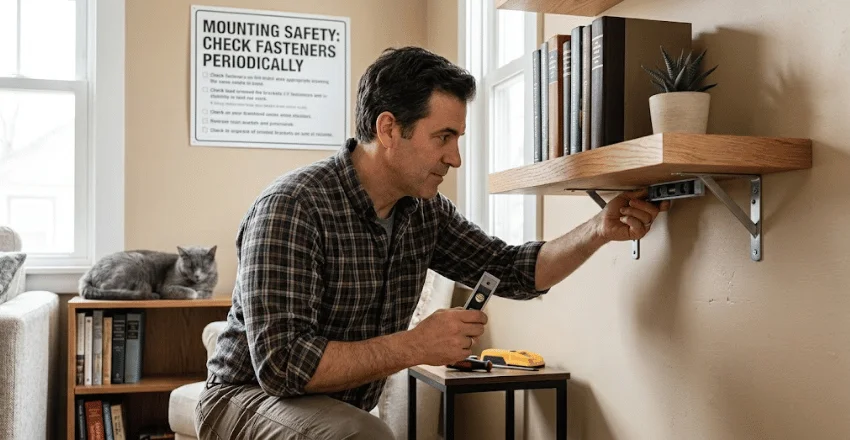
A shelf can feel solid while holding a resting cat and still fail during a jump. Movement places more demand on brackets, screws, and the wall connection. Follow the product’s mounting instructions and never guess about an unknown wall.
Many U.S. shelf systems are designed around wood-stud mounting, while masonry needs different fasteners. For drywall-only mounting, use only hardware approved for the specific product and expected load. If the wall condition is uncertain, ask a qualified installer before mounting heavy pieces.
Check the hardware again after the first few weeks of use. Look for movement, loose screws, cracked material, or a shelf pulling away from the wall. Repeat those checks periodically, especially after moving furniture or changing the route.
Plan Shared Routes for Multi-Cat Homes
Multi-cat layouts need more choices than single-cat layouts. FelineVMA guidance recommends separated resources and escape options so cats can avoid unwanted encounters. Apply that principle by creating alternate routes and more than one desirable resting spot.
Avoid a single narrow line that forces cats to pass face-to-face. A branching path lets one cat climb while another remains settled elsewhere. Two high perches can also reduce competition for one preferred lookout.
Watch how your cats use the finished setup before adding more pieces. Blocking, staring, chasing, or repeated avoidance can signal that the route feels socially tight. Moving one platform may help more than adding several decorative accessories.
Make the Setup Fit the Room
A climbing route should look intentional instead of covering every open section of wall. Match wood tones, shelf shapes, and visible hardware with nearby furniture. MagClone’s living room bookshelves guide offers ideas for coordinating vertical storage and room style.
Small rooms benefit most from using corners and the space above low furniture. Keep valuable art, lamps, and fragile objects away from likely jump paths. MagClone’s Home Improvement section can also help when the project is part of a wider room refresh.
New cat owners can browse MagClone’s Pets section for more everyday care topics. If you are still naming a new companion, the site’s white cat names guide offers another practical resource. These internal pages keep related pet and home information close together.
What to Buy First
Start with the load-bearing pieces before adding decorative accessories. A secure route with good footing is more valuable than a complicated set with weak transitions. Buy only what supports movement, resting, and safe entry or exit.
| Priority | What to look for |
|---|---|
| Shelves or platforms | Clear load guidance and suitable dimensions |
| Mounting hardware | Hardware matched to the wall and product instructions |
| Surface covering | Non-slip material that can be cleaned or replaced |
| Resting area | A larger platform for sleeping and observation |
| Optional additions | Scratching material, bridge, hammock, or cubby |
Skip extra tunnels, dangling toys, or high bridges until your cat uses the basic path confidently. Expanding slowly lets you learn which heights and surfaces your cat prefers. It also prevents spending money on pieces that do not fit the room.
Frequently Asked Questions
Is a cat wall worth it for an indoor cat?
It can be valuable when your cat already seeks windowsills, furniture tops, or other elevated places. Wall-mounted routes add usable territory without occupying much floor area. Their value depends on safe mounting, comfortable spacing, and whether your cat enjoys climbing.
How far apart should cat shelves be?
Many current guides suggest roughly 12–18 inches vertically for healthy adult cats. Smaller gaps often suit kittens, seniors, heavier cats, or animals with reduced mobility. Use your cat’s normal furniture jumps as the final guide rather than treating one measurement as universal.
How high should the top perch be?
A useful height gives your cat a good view while leaving enough headroom to sit and turn. It should also connect to a comfortable downward route. A high perch is not helpful if your cat hesitates every time it needs to descend.
Can senior cats use wall shelves?
Yes, many older cats can use them when the route requires short, stable transitions. Lower platforms, wider landings, ramps, and grippy surfaces can reduce difficult jumps. Ask your veterinarian about climbing plans if your cat shows stiffness, pain, or reduced mobility.
Can I install wall-mounted shelves in a rental?
That depends on your lease and the amount of drilling required. Freestanding or tension-based climbing systems may be better when permanent holes are restricted. Confirm the product’s ceiling, floor, and weight requirements before choosing a no-wall option.
How do I encourage my cat to use new shelves?
Begin with the lowest platform and let your cat investigate without being placed there. Treats, play, or a familiar blanket can make the route more inviting. If your cat avoids one jump repeatedly, shorten that transition instead of pushing the cat.
Build Around Your Cat, Not the Photo
An attractive layout still fails if the cat avoids it. Sketch the route, mark platform positions with painter’s tape, and compare them with your cat’s everyday movements. Then buy the minimum pieces needed for a safe first version.
Use the finished route for several weeks before expanding it. Watch where your cat rests, turns around, skips a platform, or chooses another path. Those real habits will tell you what the next shelf should do.