Last Updated on October 18, 2026 by Asmat Zahara
Regular maintenance reduces water heater repairs because most failures start as small, preventable problems: sediment building up in the tank, a worn-out anode rod letting the steel corrode, or a sticking relief valve. A few simple checks each year (flushing sediment, testing the temperature and pressure relief valve, inspecting the anode rod and setting the right temperature) catch those issues early, keep the unit efficient and help it reach or exceed its typical 8 to 12 year lifespan. Here is what to do, how often, and when to call a professional.
Why water heaters fail
Understanding the common failure points makes it clear why maintenance works. In a conventional tank water heater, the usual culprits are:
- Sediment: dissolved minerals in water, especially hard water, settle at the bottom of the tank. The layer insulates the water from the burner or lower element, so the heater runs longer, wastes energy and overheats the tank bottom. It often causes rumbling or popping noises.
- Corrosion: tanks are protected by a sacrificial anode rod that corrodes instead of the steel. Once the rod is used up, the tank itself starts to rust, and a rusted-through tank cannot be repaired, only replaced.
- Worn components: heating elements, thermostats, gas valves, thermocouples and igniters wear out over time.
- Pressure problems: a faulty temperature and pressure (T&P) relief valve or excessive household water pressure strains the tank and fittings.
Each of these develops gradually, which means each can be spotted and handled before it turns into a no-hot-water emergency or a leak that damages floors and walls.
Maintenance tasks that prevent repairs
Flush sediment from the tank
Draining part of the tank through the drain valve at the bottom removes loose sediment before it hardens. A common recommendation is to drain about a quarter of the tank several times a year, or to do a full flush at least once a year, more often in hard water areas. Turn off the power or set a gas unit to “pilot” or “vacation” first, connect a hose to the drain valve and run it to a floor drain or outside, and let the water run until it comes out clear. Be careful: the water is hot.
In and around Houston, water hardness varies depending on the source and the utility or municipal utility district serving your home. Your provider’s annual water quality report lists hardness levels, which tells you whether to flush more often or consider a water softener.
Test the temperature and pressure relief valve
The T&P valve is the most important safety device on the heater: it opens if temperature or pressure inside the tank gets too high. Test it about once a year by lifting the lever briefly, with a bucket under the discharge pipe, and letting it snap back. Water should flow out and then stop completely. If nothing comes out, or it keeps dripping afterward, have the valve replaced. Never cap or plug the discharge pipe.
Inspect the anode rod
Check the anode rod every three years or so (sooner with softened or very hard water). If it is worn down to the core wire or coated heavily with calcium, replace it. An anode rod is an inexpensive part compared with a new water heater, which makes this one of the highest-value maintenance tasks. Removing it can require a breaker bar and enough overhead clearance, so many homeowners leave it to a plumber.
Set the right temperature
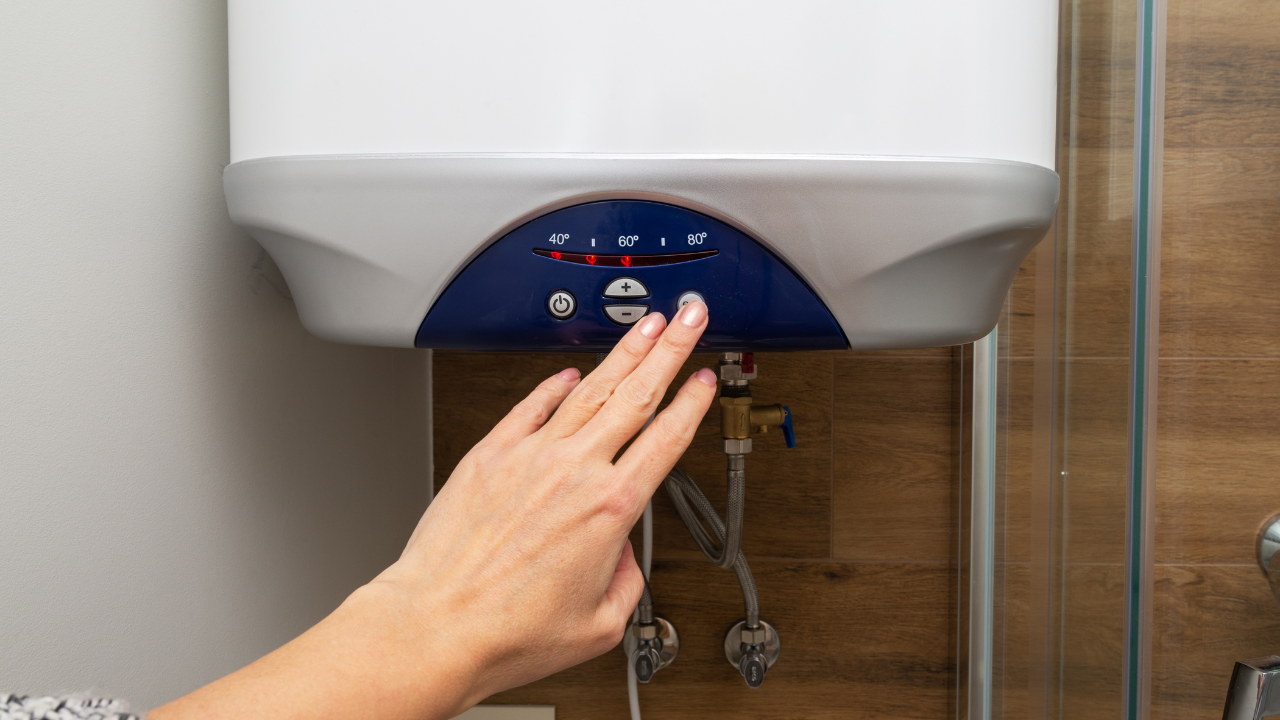
Setting the thermostat to about 120°F is widely recommended. It is hot enough for most household needs, reduces scalding risk, lowers standby heat loss and slows mineral buildup compared with higher settings such as 140°F. Check your manufacturer’s guidance if someone in the home has specific health needs.
Controls matter across the whole home. The same principle that applies to a water heater dial applies to HVAC: HVAC contractors increasingly focus on properly commissioning smart thermostats because correctly set controls prevent comfort complaints and service callbacks.
Check connections, venting and clearance
- Look for moisture, rust or mineral crust around pipe connections, the drain valve and the base of the tank.
- On gas units, make sure the vent pipe is intact and properly connected, and that the burner flame looks steady and mostly blue.
- Keep the area around the heater clear of stored items, especially flammable products. Many guides suggest roughly 2 feet of open space unless the manual says otherwise.
- If you smell gas, leave the home and call your gas utility or 911 from outside.
Insulate where it makes sense
Older tanks without much built-in insulation can benefit from an insulating jacket, and insulating the first few feet of hot and cold water pipes reduces heat loss. On gas units, keep insulation away from the burner area and flue. Most newer heaters are already well insulated, so check the manual before adding a jacket.
Tankless water heaters need care too
Tankless units do not collect sediment in a tank, but minerals can scale the heat exchanger, reducing efficiency and triggering error codes. Manufacturers typically recommend descaling (flushing with a descaling solution through service valves) on a regular schedule, often yearly and more frequently in hard water. Clean the inlet water filter screen and, for gas models, keep air intakes and vents clear.
A simple maintenance schedule
| Task | How often | DIY or pro |
|---|---|---|
| Visual check for leaks, rust and noise | Monthly | DIY |
| Drain or flush sediment | Several times a year to annually | DIY or pro |
| Test T&P relief valve | Annually | DIY |
| Check temperature setting | Annually | DIY |
| Inspect anode rod | About every 3 years | Pro recommended |
| Gas burner, venting and controls check | Annually | Pro |
| Descale tankless unit | Typically annually | DIY or pro |
Always follow your heater’s manual, which may specify different intervals. If you are trying to keep household plumbing costs down overall, our guide on how to save money and time on plumbing maintenance covers more routine tasks you can bundle together.
Signs your water heater needs repair now
Maintenance lowers the odds of trouble, but it does not eliminate it. Call a plumber if you notice:
- Water pooling around the base or dripping from the tank
- Rusty or discolored hot water, or a metallic smell
- Loud popping or banging even after flushing
- Hot water running out much faster than it used to
- A pilot light that will not stay lit, or a T&P valve that keeps discharging
- The smell of gas (leave the house first, then call)
For Houston-area homeowners, a licensed local plumber can diagnose whether the problem is a replaceable part or the end of the tank’s life. Cooper Plumbing, a family-owned company in Northwest Houston, lists installation and repair of gas, electric and tankless units among its services if you need Water heater repair Houston homeowners can schedule alongside an annual service visit.
Repair or replace?
A failed element, thermostat, thermocouple or relief valve is usually worth repairing. A leaking tank is not, because the tank itself has corroded through. Age also matters: once a tank heater passes about 10 years and needs significant repairs, many homeowners choose replacement and use the opportunity to compare more efficient options, such as heat pump or tankless models. Regular maintenance does not just reduce repair calls; it gives you time to plan a replacement instead of facing one in an emergency.
Frequently asked questions
How often should I flush my water heater?
Most guidance suggests draining part of the tank several times a year or doing a full flush at least annually, and more often if you have hard water. Check your manufacturer’s manual for its recommendation.
How long does a water heater last?
A conventional tank water heater typically lasts about 8 to 12 years. Regular flushing and timely anode rod replacement help it reach the upper end of that range.
What temperature should my water heater be set to?
About 120°F is widely recommended. It meets most household needs while reducing scalding risk, energy loss and mineral buildup.
Why is my water heater making popping noises?
Popping or rumbling usually means sediment has built up at the bottom of the tank and water trapped beneath it is boiling. Flushing the tank often helps; if the noise continues, have a plumber inspect it.
Can I maintain my water heater myself?
Many homeowners can handle visual checks, flushing and testing the relief valve. Gas burner, venting and anode rod work are often best left to a licensed plumber.