
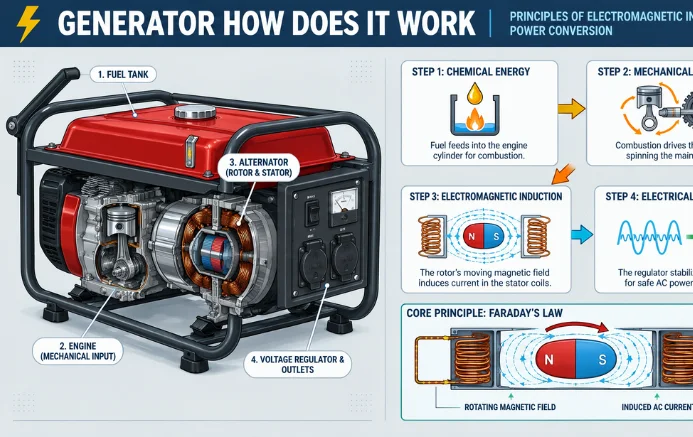
A generator converts mechanical energy into electrical energy using electromagnetic induction. If you searched generator how does it work, the basic answer starts with motion, magnets, and copper wire. An engine or another power source spins a rotor, which creates electrical voltage inside stationary windings.
This process powers everything from small portable units to massive power-plant equipment. The basic principle remains similar even when the machines look different. Understanding that principle makes generator specifications much easier to compare.
| Key fact | Simple explanation |
|---|---|
| Main purpose | Converts mechanical energy into electrical energy |
| Core principle | Electromagnetic induction |
| Main moving part | Rotor |
| Main stationary part | Stator |
| Common portable fuels | Gasoline, propane, and natural gas |
| Typical U.S. frequency | 60 Hz |
| Common uses | Backup power, construction, camping, and industrial power |
Direct answer: A generator produces electricity by creating motion between a magnetic field and conductive wire. An engine, turbine, or other force turns the rotor. That rotating magnetic field induces voltage in the stator windings. Connected electrical loads then draw current from the generator.
Key Takeaways
* A generator changes mechanical energy into electrical energy. * The rotor creates a moving magnetic field inside or near the stator. * Electromagnetic induction produces voltage in the generator windings. * Portable generators commonly use gasoline, propane, or similar fuels. * Standby models can start automatically after a utility outage. * Most household generator output in the United States is alternating current. * Portable fuel-powered generators must always operate safely outdoors.
What Is an Electric Generator?
An electric generator is a machine that converts another form of energy into electrical power. Most conventional generators begin with mechanical rotation from an engine or turbine. The U.S. Energy Information Administration describes this process as converting mechanical energy into electricity through electromagnetic induction.
The idea dates to Michael Faraday’s experiments during the nineteenth century. Faraday showed that movement between a magnetic field and a conductor can induce electrical current. Modern generator designs apply the same physical principle on many different scales.
You can read more technology explainers in MagClone’s Tech section. The category covers machines, devices, software, and other technology topics. Generator technology fits naturally within that broader subject.
Generator How Does It Work? The 7-Step Process
A working generator involves several systems operating together. The engine alone does not directly supply electricity to your appliances. Instead, it provides the motion needed for the electrical generation process.
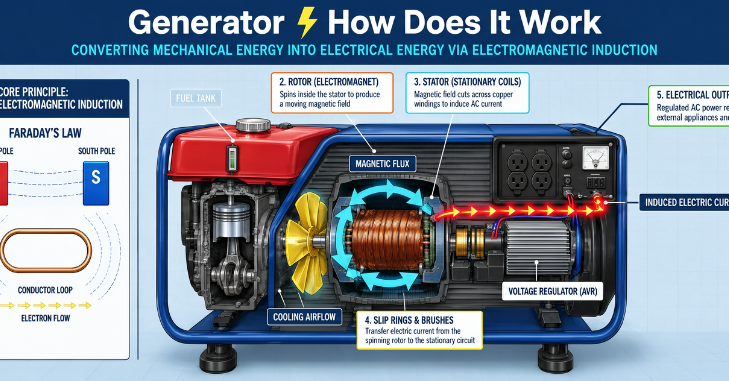
1. Fuel or another energy source provides input. A portable unit may burn gasoline or propane. Larger systems may use natural gas, diesel, steam, water, or wind. 2. The engine or turbine creates mechanical rotation. That energy turns a shaft connected to the generator assembly. 3. The shaft spins the rotor. The rotor carries a magnetic field created by magnets or electromagnets. 4. The magnetic field moves relative to the stator. The stator contains stationary conductive windings, usually made with copper. 5. Electromagnetic induction creates voltage. The changing magnetic field pushes electrical charges within the conductor. 6. Current flows when a load is connected. Appliances, tools, lights, or building circuits provide a path for electrical current. 7. Control systems regulate the output. Voltage regulators and related components help keep the supplied electricity within usable operating limits.
This ” How Does It Work explanation explains why generators need both mechanical and electrical components. A generator How Does It Work problem on either side can stop useful power production. Engine trouble can prevent rotation, while electrical faults can interrupt output.
The Main Parts Inside a Generator
The engine supplies mechanical power in many portable and standby units. Engine size usually affects how much electrical output the machine can support. Fuel, maintenance, operating speed, and load also influence performance.
The alternator contains the main components that produce electricity. Its rotor turns while the stator remains stationary. According to the EIA, the relative movement creates the changing magnetic field needed for current generation.
A voltage regulator helps control output voltage as electrical demand changes. The fuel system stores and delivers fuel on combustion-powered models. Cooling, lubrication, exhaust, and control systems support safe operation during extended use.
Portable models also include electrical outlets and circuit protection. Larger home systems may connect through dedicated switching equipment. That setup lets selected household circuits receive backup power during an outage.
How the Rotor and Stator Produce Electricity
The rotor and stator form the center of a conventional electromagnetic generator. The rotor rotates and creates a changing magnetic field. The stator contains conductive windings positioned around that moving magnetic field.
Movement changes the magnetic flux passing through the conductors. That change induces voltage in the windings. When you connect an electrical load, the voltage can drive current through the circuit.
A simple comparison is a motor operating in reverse. A motor uses electricity to produce mechanical movement. A generator starts with mechanical movement and produces electrical power.
Does a Generator Make AC or DC Power?
Most generators used for household backup produce alternating current, or AC. AC changes direction repeatedly as the rotor turns. The U.S. electrical system operates at a nominal frequency of 60 hertz.
Some generator systems also produce or supply direct current for specific applications. Battery-charging circuits are one common example. Electronics inside modern inverter generators can also convert electrical output before supplying connected devices.
An inverter generator generally produces electrical power before electronically conditioning the output. This design can provide stable power across changing engine speeds. It is commonly used where noise, fuel consumption, or sensitive electronics matter.
Portable vs. Standby Generators
Portable generators are designed to move between locations. They are commonly used for temporary backup power, worksites, outdoor events, and recreation. MagClone also covers portable generator use for camping.
Standby generators are permanently installed outside a home or building. Many connect to natural gas or propane and monitor utility power automatically. When an outage occurs, the system can start and transfer supported circuits to backup electricity.
Portable units normally require more manual setup during an outage. Standby systems cost more because installation involves electrical and fuel connections. The right option depends on required wattage, outage frequency, budget, and installation needs.
Homeowners comparing backup systems may also find related maintenance topics in MagClone’s Home Improvement section. Backup power is often part of wider emergency and home-maintenance planning. Electrical work should follow local codes and manufacturer instructions.
Where Does the Mechanical Energy Come From?
A generator needs an energy source capable of producing movement. Portable units usually use an internal-combustion engine to rotate the shaft. That engine may burn gasoline, diesel, propane, or natural gas.
Power plants use other methods to create the same rotating motion. Steam, flowing water, combustion gases, and wind can all turn turbines. Those turbines then rotate generator equipment connected to the electrical system.
The energy source can change without changing the central generator principle. Motion still occurs relative to a magnetic field and conductor. That relationship is what allows electrical voltage to develop.
Why Generator Wattage Matters
Generator capacity is commonly expressed in watts or kilowatts. Your connected equipment cannot safely demand more power than the unit can provide. Starting motors may also require more power than their normal running demand.
Refrigerators, air conditioners, pumps, and power tools can create high startup loads. That difference makes both running watts and starting watts important. Check the appliance label and generator manual before calculating a backup-power plan.
Choosing capacity also requires prioritizing essential loads. A smaller unit may run lighting, refrigeration, communications, and selected appliances. Whole-home systems need substantially more capacity when several large loads operate together.
How Portable Generators Should Be Used Safely
Fuel-powered generators produce exhaust that can contain dangerous carbon monoxide. The CDC says portable generators should operate outdoors, at least 20 feet from doors, windows, and vents. Exhaust should also point away from occupied buildings.
Never operate a portable generator inside a house, basement, garage, or enclosed structure. Opening garage doors or windows does not make indoor operation safe. Battery-powered or battery-backup carbon monoxide alarms add another important layer of protection.
Electrical connections also require proper equipment and procedures. Never connect a generator to household wiring through an improvised outlet connection. A suitable transfer system helps prevent dangerous electrical backfeeding when building circuits need generator power.
What Happens When Generator Load Increases?
Connecting more equipment requires the generator to supply more electrical power. The engine must provide enough mechanical energy to support that demand. Control systems respond by managing engine operation and electrical output.
Excessive load can cause voltage drops, breaker trips, overheating, or shutdown. Continued overloading may damage the generator or connected equipment. Staying within the manufacturer’s rated limits reduces that risk.
Load planning is especially useful during long outages. Essential appliances should receive priority over optional devices. Spreading large startup loads can also prevent sudden overload conditions.
Do Solar Generators Work the Same Way?
Products marketed as solar generators work differently from engine-driven electrical generators. They usually combine a battery, inverter, charging electronics, and electrical outlets. Solar panels charge the battery by converting sunlight directly into electricity.
No fuel-burning engine spins a rotor inside the typical portable solar power station. Stored battery energy is converted into usable output through electronic components. The term “solar generator” is therefore a common consumer label rather than the same mechanical process.
These systems can still provide useful backup power for suitable loads. Their runtime depends on battery capacity, connected demand, and available charging energy. Larger appliances can drain a small battery system quickly.
The Bottom Line
Generators are easier to understand when you separate the process into energy stages. Fuel, wind, water, or another source first creates mechanical motion. The generator then converts that movement into electrical energy through electromagnetic induction.
For homeowners, the science matters because it explains wattage, fuel use, load limits, and electrical output. It also shows why correct setup and maintenance are necessary. Always follow the manufacturer’s instructions and current safety guidance before operating any backup generator.
Frequently Asked Questions
How does a generator work in simple terms?
A generator uses mechanical motion to create electrical voltage through electromagnetic induction. An engine or turbine turns a rotor near stationary conductive windings. The changing magnetic field creates electricity that can power connected equipment.
Does a generator create electricity from nothing?
No, a generator converts energy rather than creating energy from nothing. Mechanical energy enters the system through an engine, turbine, or another source. Some of that input becomes useful electrical output, while some becomes heat and other losses.
Why does a generator need fuel?
Combustion-powered generators need fuel because the engine must create mechanical rotation. That rotation drives the rotor inside the electrical generator assembly. Wind, hydroelectric, and turbine systems use different energy sources to create the required movement.
What is the difference between a generator and an alternator?
Both devices use electromagnetic induction to produce electricity. The word alternator usually describes equipment designed to generate alternating current. In everyday backup-power discussions, people often use “generator” for the entire engine-and-alternator machine.
Can a portable generator power a whole house?
Some high-output portable generators can support many household circuits. Actual capability depends on starting loads, running loads, wiring, and generator capacity. A qualified electrician can determine the correct connection method and transfer equipment.