Last Updated on October 15, 2026 by Nasir Hanif
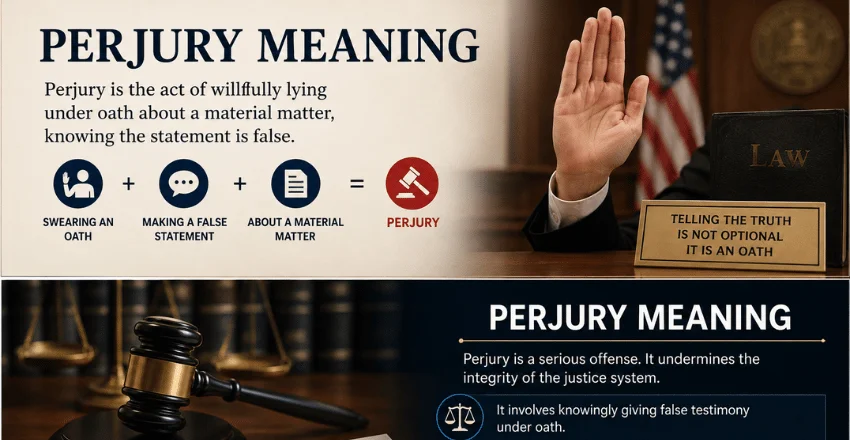
If you searched for “perjury meaning,” the simplest answer is knowingly giving important false information while under a legally recognized oath. It can happen in court and, in some situations, through a signed declaration. An honest mistake or poor memory usually isn’t enough to establish the offense. Related reading: Exonerated Meaning.
Short answer: The offense involves knowingly making a false statement about an important matter after taking an oath or signing a qualifying declaration under penalty of perjury. A simple mistake, confusion, or faulty memory is not enough. Under U.S. federal law, the false statement must also be material to the matter being decided. More from us: Malicious Prosecution in the U.S.
| Key question | Simple answer |
| What must be false? | A statement or declaration presented as true |
| Does the speaker need to know it is false? | Yes, knowledge or willfulness is a central element |
| Does every false detail count? | No, the statement generally must be material |
| Can poor memory be enough? | Usually not if the mistake is genuine |
| Can written declarations qualify? | Certain federal declarations made under penalty of perjury can qualify |
| Is it a crime? | Yes, federal law provides criminal penalties |
| Can state rules differ? | Yes, exact definitions and penalties depend on the jurisdiction |
This article focuses on the U.S. federal framework. State statutes may use different wording and may provide different defenses and penalties.
Perjury Meaning in Law: Four Parts That Matter
Federal statutes and jury instructions show why a false statement alone doesn’t establish the offense. Prosecutors generally need evidence showing an oath or qualifying declaration, falsity, materiality, and the required state of mind.
The statement is made under an oath or qualifying declaration
A courtroom witness normally takes an oath or affirmation before testifying. Federal rules require witnesses to give an oath or affirmation intended to impress upon them the duty to testify truthfully. Federal law can also apply to certain written declarations. The key question isn’t simply whether a document has a signature. The legal setting and wording also matter.
For more plain-English explanations of legal topics, readers can browse Magclone’s Law section.
The statement is false
There must be a difference between what was stated and what is true. A truthful statement that creates an unfavorable impression isn’t automatically a false statement. The wording of the question can also matter. Courts may examine what was asked, what was answered, and the context surrounding the testimony.
The false statement is material
A minor incorrect detail isn’t enough on its own. A material statement is generally one that could influence the decision-making body considering the matter. Imagine that a witness gives the wrong color of a waiting-room chair. That error may have nothing to do with the issue being disputed.
Now imagine that the witness knowingly lies about whether a defendant was present when an event occurred. That fact could directly affect the case.
The falsehood is knowing or willful
Intent separates a deliberate lie from an innocent error. Confusion, mistake, or faulty memory generally doesn’t satisfy the knowledge requirement. Calling every courtroom error perjury would ignore this distinction. Prosecutors must establish the required mental state, not merely show that an answer turned out to be wrong.
What Does and Does Not Count as Lying Under Oath?
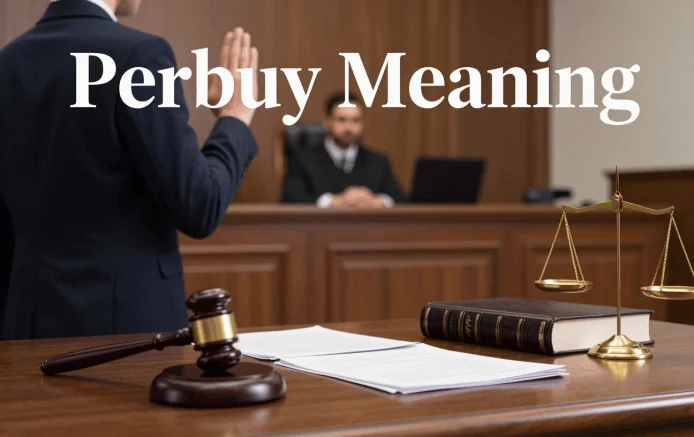
The comparison below shows why context matters more than the mere existence of an inaccurate statement.
| Situation | Likely legal concern | Why |
| A witness deliberately invents an important event | High | The answer may be knowingly false and material |
| A witness honestly remembers a date incorrectly | Lower | A genuine memory failure may defeat the intent requirement |
| Someone lies about an unrelated minor detail | Depends | The statement may lack materiality |
| A person knowingly files a qualifying false declaration | High | Federal law can apply to certain written declarations |
| Someone changes an answer after realizing a genuine mistake | Depends | Timing, intent, and the applicable statute matter |
| A person gives false information outside an oath | Different issue | Another false-statement law may apply instead |
These examples are simplified. Real cases depend on the precise questions, evidence, wording, and applicable law.
Can Written Statements Count?
Yes, some can. Federal law allows certain unsworn declarations to substitute for sworn declarations when they contain the required language. Federal perjury law can also apply to qualifying false declarations made under penalty of perjury. A casual email, social media comment, or unsigned note doesn’t become perjury merely because it contains false information.
The document’s legal status matters.
What Penalties Can Apply?
Under the general federal perjury statute, a conviction can result in a fine, imprisonment for up to five years, or both. A separate federal provision addresses certain false material declarations made in federal court and grand jury proceedings. These federal rules don’t provide a universal penalty chart. State laws can establish different classifications, sentencing ranges, and procedures.
Anyone facing a criminal allegation should seek advice based on the jurisdiction and the facts involved. Magclone’s guide on why having a criminal defense attorney can matter provides broader context about seeking legal representation.
Why Materiality and Intent Matter
Two people can make similar inaccurate statements but face different legal outcomes. Suppose one witness gives the wrong date because the event happened years earlier. Another witness remembers the correct date but deliberately substitutes a different one to change the apparent timeline.
The statements may look similar on paper, but the second situation provides much stronger evidence of deliberate deception. Materiality creates another distinction. The law focuses on falsehoods that could affect a proceeding or decision rather than treating every irrelevant mistake equally.
Perjury vs. False Statements: Are They the Same?
No. Perjury generally involves a knowingly false, material statement made under an oath or through a qualifying legal declaration. Other federal laws can prohibit material false statements even when no oath was taken. For example, federal law prohibits certain knowingly and willfully false statements made in matters within the federal government’s jurisdiction. The requirements and exceptions differ from those that apply to sworn testimony.
This distinction is useful whenever you read about criminal allegations. Magclone’s explanation of DUI consequences and common myths also shows why specific legal terms should be distinguished from broader assumptions about criminal law.
The Takeaway: Look at the Context, Not Only the False Statement
A false statement doesn’t tell you the whole legal story. Ask four questions: Was there an oath or qualifying declaration? Was the statement false? Was it material? Was it made knowingly or willfully? Those questions explain why deliberate false testimony about a central fact differs from a forgotten date or an innocent mistake.
If you’re researching a real accusation, use general explanations to understand the terminology. Then seek jurisdiction-specific legal advice before drawing conclusions about liability or possible penalties.
Frequently Asked Questions
It means deliberately providing important false information after taking an oath to tell the truth or in certain legally recognized declarations. The exact legal requirements depend on the jurisdiction.
No. The false statement generally must meet additional requirements, including materiality and the required state of mind. An irrelevant false detail may not satisfy every element of the offense.
Certain written declarations can. Federal law recognizes specific declarations made with required language, including qualifying declarations made under penalty of perjury.
A genuine memory error is different from knowingly giving false information. A mistake, confusion, or faulty memory may prevent the government from proving the required intent.
Don’t rely on a general online definition to assess a criminal case. Speak with a qualified criminal defense lawyer who practices in the relevant jurisdiction and can review the testimony, documents, and evidence.